Word Explanation
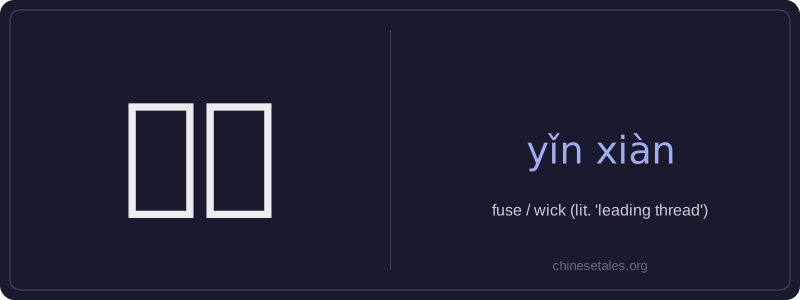
‘引线’ literally means 'leading thread' — combining 引 (yǐn), meaning 'to lead, draw, or guide', and 线 (xiàn), meaning 'thread, wire, or line'. In practice, it refers to a fuse or wick: a slender, combustible cord used to ignite explosives, fireworks, or incendiary devices. Historically, it was made of slow-burning material like gunpowder-coated hemp or paper; today, modern versions may be electric or chemical. Though technically neutral in register, 引线 appears most often in technical, safety-related, or historical contexts — such as describing firework mechanisms, military ordnance, or controlled demolition.
The term carries a subtle connotation of control and timing: the引线 determines *when* an event occurs, making it metaphorically linked to cause-and-effect sequences. While not commonly used in everyday casual speech, it’s essential vocabulary for understanding descriptions of pyrotechnics, mining, or even idioms like ‘点燃引线’ (to light the fuse — i.e., trigger a chain reaction). It should not be confused with generic ‘wire’ (电线) or ‘rope’ (绳子), as its function is specifically ignition-related.
Example Sentences
Related Words
面条
‘面条’ (miàn tiáo) literally means ‘flour str
背后
背后 literally means 'back + behind' and functions
认同
‘认同’ (tóng rèn) is a verb meaning ‘to ident
无论谁
‘无论谁’ (wú lùn shéi) is a pronoun meaning
中学
'Zhōngxué' literally combines 'zhōng' (middle)
外语
‘外语’ literally means ‘outside language’ —
认为
‘认为’ (rèn wéi) is a transitive verb meaning
认可
认可 (rèn kě) is a formal, transitive verb meani