Word Explanation
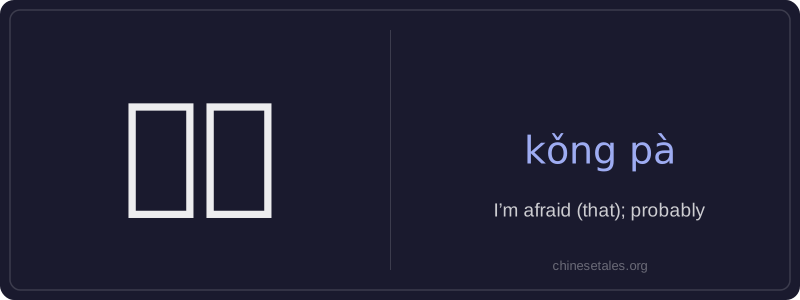
恐怕 is an adverbial phrase meaning 'I’m afraid (that)' or 'probably' — it expresses mild uncertainty, hesitation, or polite pessimism. Though composed of two characters meaning 'fear' (恐) and 'to fear/afraid' (怕), together they function not as a literal expression of terror but as a softening device, similar to English phrases like 'I’m afraid' or 'it seems likely'. It’s commonly used before clauses to temper bad news, express doubt, or suggest likelihood without sounding overly assertive.
This phrase is highly conversational and appears frequently in spoken Mandarin and informal writing. It typically precedes a verb phrase or full clause (e.g., 恐怕要下雨了 — 'It’ll probably rain'), and rarely stands alone. Unlike the standalone verb 害怕 ('to be scared'), 恐怕 carries no strong emotional intensity — its tone is measured, courteous, and often diplomatic, making it especially useful in professional or sensitive contexts.
Example Sentences
Related Words
面条
‘面条’ (miàn tiáo) literally means ‘flour str
背后
背后 literally means 'back + behind' and functions
认同
‘认同’ (tóng rèn) is a verb meaning ‘to ident
无论谁
‘无论谁’ (wú lùn shéi) is a pronoun meaning
中学
'Zhōngxué' literally combines 'zhōng' (middle)
见面
见面 literally means 'see face' — combining 见 (t
外语
‘外语’ literally means ‘outside language’ —
认为
‘认为’ (rèn wéi) is a transitive verb meaning