Word Explanation
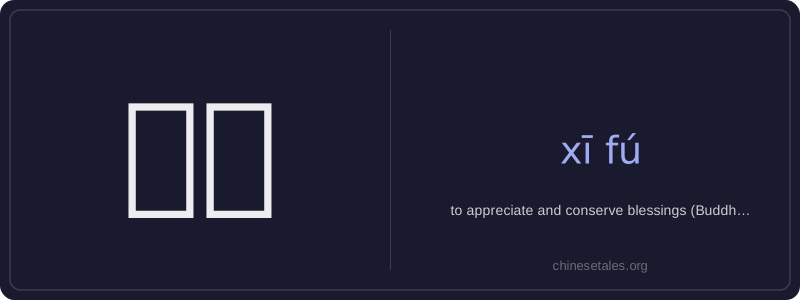
‘Xī fú’ is a classical Chinese term rooted in Buddhist and Daoist ethics, literally meaning ‘to cherish blessings’ or ‘to treasure good fortune’. The character 惜 (xī) conveys careful preservation, regret at loss, or deep appreciation — like valuing something fragile and irreplaceable. 福 (fú) means ‘blessing’, ‘good fortune’, or ‘well-being’, often referring to the positive conditions of life: health, harmony, abundance, or peace. Together, 惜福 expresses a mindful attitude of gratitude and restraint — recognizing that blessings are finite and impermanent, and thus should be used with humility and moderation.
This concept appears frequently in moral instruction, family teachings, and spiritual practice. It encourages people not to waste food, time, energy, or relationships; to live simply even when prosperous; and to avoid arrogance or excess. In modern usage, it’s often invoked in discussions about sustainability, frugality, and emotional resilience — framing conservation not as scarcity mindset, but as respectful stewardship of life’s gifts.
Example Sentences
Related Words
面条
‘面条’ (miàn tiáo) literally means ‘flour str
背后
背后 literally means 'back + behind' and functions
认同
‘认同’ (tóng rèn) is a verb meaning ‘to ident
无论谁
‘无论谁’ (wú lùn shéi) is a pronoun meaning
中学
'Zhōngxué' literally combines 'zhōng' (middle)
见面
见面 literally means 'see face' — combining 见 (t
外语
‘外语’ literally means ‘outside language’ —
认为
‘认为’ (rèn wéi) is a transitive verb meaning