Word Explanation
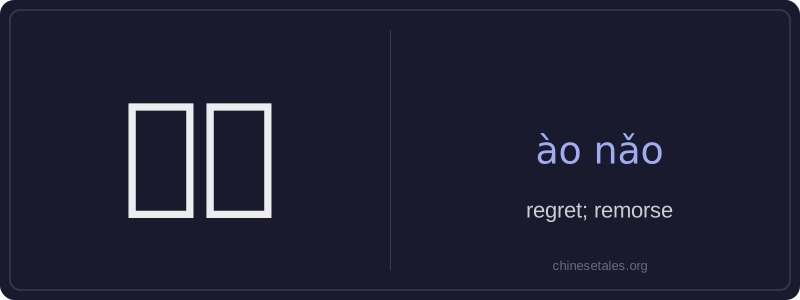
Ào nǎo (懊恼) is a compound word expressing deep, inward-facing regret or remorse—often accompanied by frustration or self-reproach. The first character 懊 (ào) conveys sorrowful reflection, while 恼 (nǎo) adds the sense of mental distress or vexation; together, they emphasize an emotional state where one feels troubled by past actions or missed opportunities. It’s commonly used in written and formal spoken Chinese, especially when describing personal disappointment or moral unease.
This word carries a stronger, more introspective tone than simpler synonyms like 后悔 (hòuhuǐ, 'to regret')—it suggests lingering discomfort rather than momentary regret. It frequently appears in literature, essays, and reflective speech, often followed by clauses explaining the cause (e.g., '懊恼自己没好好珍惜'). While it can function as both a noun ('a feeling of remorse') and a verb ('to feel remorse'), it rarely takes aspect markers like 了 or 过 in casual speech, preserving its literary weight.
Example Sentences
Related Words
面条
‘面条’ (miàn tiáo) literally means ‘flour str
背后
背后 literally means 'back + behind' and functions
认同
‘认同’ (tóng rèn) is a verb meaning ‘to ident
无论谁
‘无论谁’ (wú lùn shéi) is a pronoun meaning
中学
'Zhōngxué' literally combines 'zhōng' (middle)
见面
见面 literally means 'see face' — combining 见 (t
外语
‘外语’ literally means ‘outside language’ —
认为
‘认为’ (rèn wéi) is a transitive verb meaning