Word Explanation
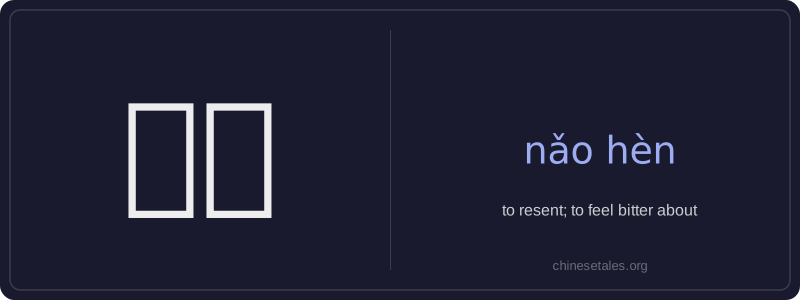
恼恨 is a compound verb meaning 'to resent' or 'to feel bitter about' something or someone. It combines 恼 (nǎo), which conveys irritation, annoyance, or mental distress, and 恨 (hèn), which expresses deep-seated hatred, grudge, or intense dislike. Together, they emphasize a sustained, emotionally charged resentment—not just momentary anger, but a lingering bitterness rooted in perceived injustice, betrayal, or repeated disappointment.
This word is typically used in formal or literary contexts, and often appears in written narratives, essays, or serious conversation. It usually takes a noun or clause as its object (e.g., 恼恨某人, 恼恨不公平的待遇). Unlike casual terms like 生气 (shēngqì, 'to get angry'), 恼恨 implies emotional depth and duration—suggesting the speaker has dwelled on the grievance and feels it acutely. It’s rarely used in lighthearted or humorous speech and carries a somewhat solemn, even somber tone.
Example Sentences
Related Words
面条
‘面条’ (miàn tiáo) literally means ‘flour str
背后
背后 literally means 'back + behind' and functions
认同
‘认同’ (tóng rèn) is a verb meaning ‘to ident
无论谁
‘无论谁’ (wú lùn shéi) is a pronoun meaning
中学
'Zhōngxué' literally combines 'zhōng' (middle)
见面
见面 literally means 'see face' — combining 见 (t
外语
‘外语’ literally means ‘outside language’ —
认为
‘认为’ (rèn wéi) is a transitive verb meaning