Word Explanation
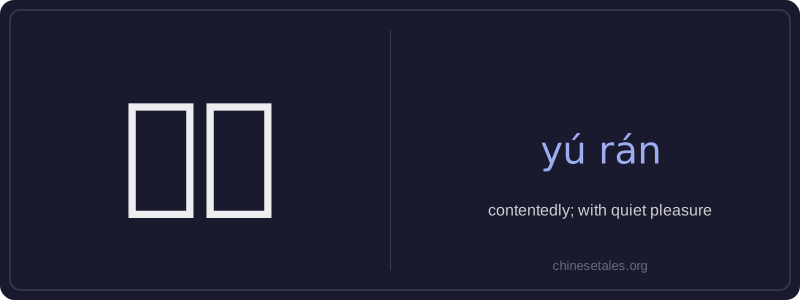
愉然 (yú rán) is an adverb meaning 'contentedly' or 'with quiet pleasure.' It combines 愉 (yú), meaning 'joyful' or 'pleased,' and 然 (rán), a classical suffix that turns adjectives into adverbs — equivalent to '-ly' in English. Together, they evoke a gentle, inward sense of satisfaction, not loud excitement but calm, untroubled delight.
This word is commonly used in literary, descriptive, or reflective contexts — such as describing someone’s demeanor while reading, watching nature, or spending quiet time with loved ones. It appears more frequently in written Chinese and formal speech than in casual conversation, often paired with verbs like '微笑' (smile), '踱步' (stroll), or '欣赏' (appreciate). While it carries positive emotional weight, it avoids exaggeration, making it ideal for portraying serene, understated happiness.
Example Sentences
Related Words
面条
‘面条’ (miàn tiáo) literally means ‘flour str
背后
背后 literally means 'back + behind' and functions
认同
‘认同’ (tóng rèn) is a verb meaning ‘to ident
无论谁
‘无论谁’ (wú lùn shéi) is a pronoun meaning
中学
'Zhōngxué' literally combines 'zhōng' (middle)
见面
见面 literally means 'see face' — combining 见 (t
外语
‘外语’ literally means ‘outside language’ —
认为
‘认为’ (rèn wéi) is a transitive verb meaning