Word Explanation
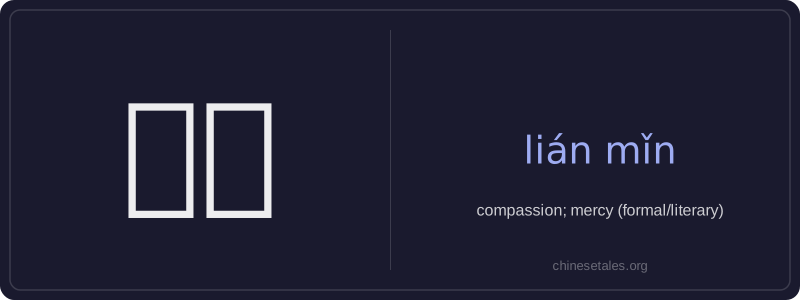
‘怜悯’ is a formal, literary noun meaning deep compassion or mercy—especially toward those suffering, vulnerable, or powerless. The character 怜 (lián) conveys tender concern or pity, often with emotional resonance, while 悯 (mǐn) emphasizes sorrowful awareness of another’s hardship. Together, they form a compound that carries moral weight and solemnity, frequently appearing in classical texts, philosophical discourse, religious contexts, or solemn modern writing—not in casual speech.
This word evokes empathy rooted in shared humanity rather than mere sympathy. It implies both emotional response and ethical stance: to feel ‘lián mǐn’ is to recognize injustice or pain and be moved toward kindness or action. Unlike more neutral terms like ‘同情’ (tóng qíng), ‘怜悯’ can subtly suggest a power imbalance—the observer holds relative privilege or safety, making the feeling both compassionate and potentially humbling.
Example Sentences
Related Words
面条
‘面条’ (miàn tiáo) literally means ‘flour str
背后
背后 literally means 'back + behind' and functions
认同
‘认同’ (tóng rèn) is a verb meaning ‘to ident
无论谁
‘无论谁’ (wú lùn shéi) is a pronoun meaning
中学
'Zhōngxué' literally combines 'zhōng' (middle)
见面
见面 literally means 'see face' — combining 见 (t
外语
‘外语’ literally means ‘outside language’ —
认为
‘认为’ (rèn wéi) is a transitive verb meaning