Word Explanation
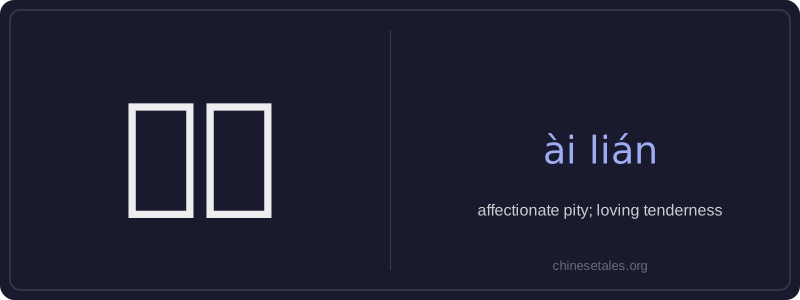
Ài lián combines 爱 (ài, 'love') and 怜 (lián, 'pity' or 'compassion'), resulting in a tender, protective feeling—like love softened by empathy for someone’s vulnerability. It’s not romantic love nor simple sympathy, but a gentle, caring affection often directed toward those who are weak, young, injured, or dependent—such as children, elderly parents, or wounded animals.
This word carries literary and poetic weight; it appears more frequently in written Chinese, classical texts, and formal speech than in casual conversation. It conveys emotional depth and moral warmth, suggesting the speaker both cherishes and feels moved by another’s fragility. Unlike plain 爱 or 怜 alone, ài lián implies an inseparable blend: love that arises *because of*, or is deepened *by*, compassionate awareness.
Example Sentences
Related Words
面条
‘面条’ (miàn tiáo) literally means ‘flour str
背后
背后 literally means 'back + behind' and functions
认同
‘认同’ (tóng rèn) is a verb meaning ‘to ident
无论谁
‘无论谁’ (wú lùn shéi) is a pronoun meaning
中学
'Zhōngxué' literally combines 'zhōng' (middle)
见面
见面 literally means 'see face' — combining 见 (t
外语
‘外语’ literally means ‘outside language’ —
认为
‘认为’ (rèn wéi) is a transitive verb meaning