Word Explanation
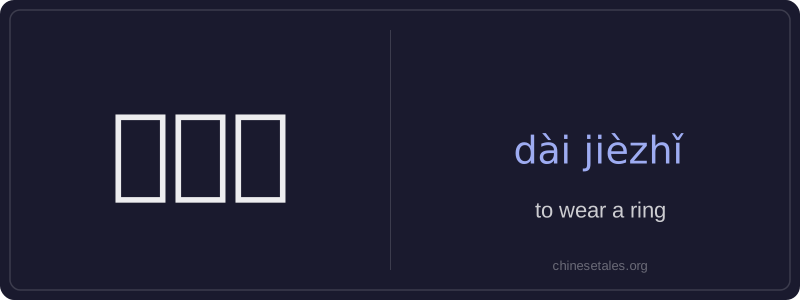
'戴戒指' (dài jièzhǐ) literally means 'to wear a ring' and functions as a verb phrase in Chinese. The character 戴 (dài) means 'to wear'—specifically for items placed on the head, hands, or ears (e.g., hats, glasses, earrings, rings); 戒 (jiè) means 'ring', especially a band worn on the finger, often associated with commitment or status; and 指 (zhǐ) means 'finger'. Together, they form an idiomatic expression used exclusively for wearing a ring on the finger—not for other types of jewelry like necklaces or bracelets.
This phrase commonly appears in contexts related to marriage proposals, weddings, engagement, fashion, or personal style. It can be used reflexively ('she wears a ring') or transitively ('he put on his wedding ring'). Unlike English, Chinese does not use a separate verb for 'putting on' versus 'wearing'; 戴 covers both actions depending on context and aspect particles (e.g., 了 or 着). It is neutral in register and appropriate in both spoken and written language.
Example Sentences
Related Words
面条
‘面条’ (miàn tiáo) literally means ‘flour str
背后
背后 literally means 'back + behind' and functions
认同
‘认同’ (tóng rèn) is a verb meaning ‘to ident
无论谁
‘无论谁’ (wú lùn shéi) is a pronoun meaning
中学
'Zhōngxué' literally combines 'zhōng' (middle)
见面
见面 literally means 'see face' — combining 见 (t
外语
‘外语’ literally means ‘outside language’ —
认为
‘认为’ (rèn wéi) is a transitive verb meaning