Word Explanation
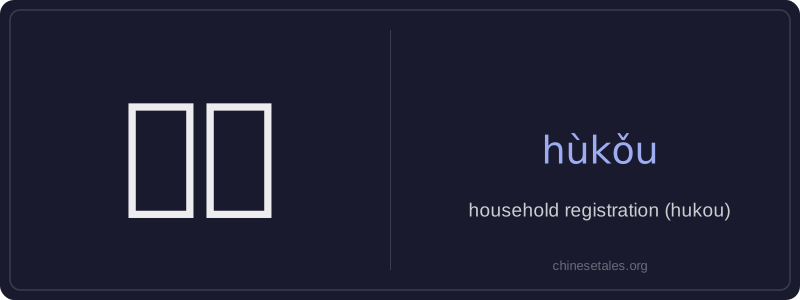
‘Hùkǒu’ (户口) literally combines ‘hù’ (household, family unit) and ‘kǒu’ (mouth, used here as a classical measure word for people). Together, it refers to China’s official household registration system — a legal record linking individuals to a specific geographic location, traditionally tied to access to public services like education, healthcare, and housing. Unlike a simple ID card or residence permit, hukou is inherited at birth and historically difficult to change.
The system creates two main categories: rural and urban hukou, with significant implications for social mobility and resource allocation. While reforms have relaxed some restrictions in recent years, hukou remains deeply embedded in administrative practice — affecting everything from school enrollment to marriage registration and even job applications in major cities. It reflects both bureaucratic identity and socio-economic status in contemporary China.
Example Sentences
Related Words
面条
‘面条’ (miàn tiáo) literally means ‘flour str
背后
背后 literally means 'back + behind' and functions
认同
‘认同’ (tóng rèn) is a verb meaning ‘to ident
无论谁
‘无论谁’ (wú lùn shéi) is a pronoun meaning
中学
'Zhōngxué' literally combines 'zhōng' (middle)
见面
见面 literally means 'see face' — combining 见 (t
外语
‘外语’ literally means ‘outside language’ —
认为
‘认为’ (rèn wéi) is a transitive verb meaning