Word Explanation
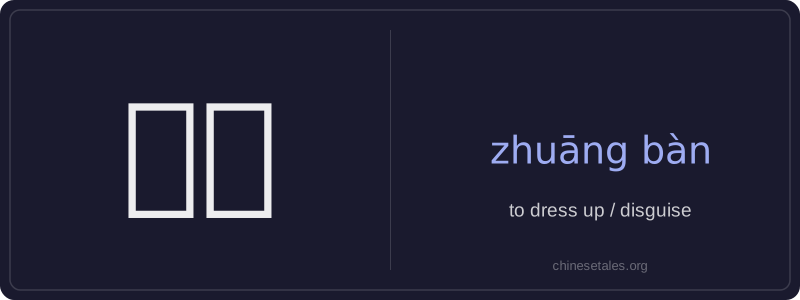
‘装扮’ is a verb meaning ‘to dress up’ or ‘to disguise oneself’, often with intention, creativity, or for a specific purpose—such as for a festival, performance, or role-play. The first character 装 (zhuāng) means ‘to dress’, ‘to equip’, or ‘to pretend’, while 扮 (bàn) means ‘to assume a role’ or ‘to impersonate’. Together, they emphasize both outward appearance and performative identity—not just wearing clothes, but adopting an image or persona.
This word is commonly used in contexts involving costume, theatrical preparation, themed parties, or even playful self-expression (e.g., dressing up pets or children). It carries a neutral-to-positive connotation and implies conscious effort and aesthetic intent. Unlike the more casual ‘穿 (chuān)’ (to wear), 装扮 focuses on transformation and presentation, and unlike ‘伪装 (wěizhuāng)’, it rarely implies deception for harmful purposes—it’s more about fun, celebration, or artistic expression.
Example Sentences
Related Words
国语
‘Guó yǔ’ literally means 'national language'—
面条
‘面条’ (miàn tiáo) literally means ‘flour str
背后
背后 literally means 'back + behind' and functions
认同
‘认同’ (tóng rèn) is a verb meaning ‘to ident
无论谁
‘无论谁’ (wú lùn shéi) is a pronoun meaning
中学
'Zhōngxué' literally combines 'zhōng' (middle)
见面
见面 literally means 'see face' — combining 见 (t
外语
‘外语’ literally means ‘outside language’ —