Word Explanation
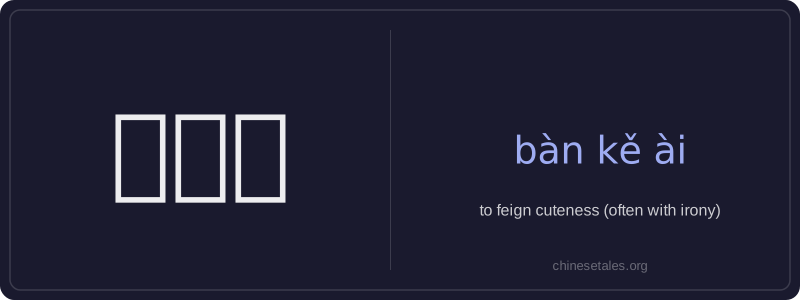
‘扮可爱’ literally means ‘to act cute’ or ‘to put on cuteness’ — it describes the intentional, often exaggerated performance of childlike innocence, helplessness, or sweetness to elicit sympathy, attention, or advantage. The verb 扮 (bàn) means ‘to play a role’ or ‘to pretend’, while 可爱 (kě ài) means ‘cute’ or ‘adorable’. Together, they form a verb phrase that carries strong pragmatic nuance: it’s rarely neutral and frequently implies irony, insincerity, or social manipulation.
This expression is common in informal spoken Mandarin, especially among young people discussing behavior in relationships, online interactions, or workplace dynamics. It often appears with skeptical or teasing tone — for example, when someone pouts, uses baby talk, or feigns ignorance to avoid responsibility. Unlike genuine expressions of affection or playfulness, 扮可爱 suggests conscious performance, and listeners may respond with gentle mockery or mild disapproval.
Example Sentences
Related Words
国语
‘Guó yǔ’ literally means 'national language'—
面条
‘面条’ (miàn tiáo) literally means ‘flour str
背后
背后 literally means 'back + behind' and functions
认同
‘认同’ (tóng rèn) is a verb meaning ‘to ident
无论谁
‘无论谁’ (wú lùn shéi) is a pronoun meaning
中学
'Zhōngxué' literally combines 'zhōng' (middle)
见面
见面 literally means 'see face' — combining 见 (t
外语
‘外语’ literally means ‘outside language’ —