Word Explanation
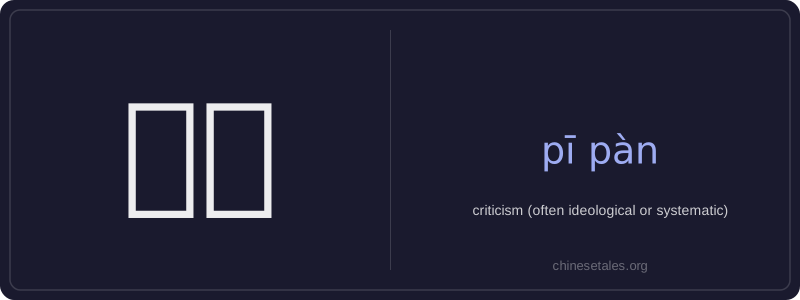
批判 (pī pàn) means 'criticism', but it carries a stronger, more systematic or ideological connotation than the general term 批评 (pī píng). The character 批 (pī) originally meant 'to strike' or 'to chop', suggesting decisive, forceful action; 判 (pàn) means 'to judge' or 'to decide', implying analysis and verdict. Together, 批判 suggests not just pointing out flaws, but thoroughly examining, condemning, and rejecting ideas, behaviors, or systems deemed harmful, incorrect, or reactionary—especially in political, academic, or moral contexts.
This word is common in formal writing, historical discourse, and ideological education. It often appears in phrases like 批判性思维 (critical thinking) or 自我批判 (self-criticism), where the emphasis is on rigorous, principled evaluation rather than casual disapproval. Unlike everyday criticism, 批判 implies authority, seriousness, and often a collective or institutional stance.
Example Sentences
Related Words
国语
‘Guó yǔ’ literally means 'national language'—
面条
‘面条’ (miàn tiáo) literally means ‘flour str
背后
背后 literally means 'back + behind' and functions
认同
‘认同’ (tóng rèn) is a verb meaning ‘to ident
无论谁
‘无论谁’ (wú lùn shéi) is a pronoun meaning
中学
'Zhōngxué' literally combines 'zhōng' (middle)
见面
见面 literally means 'see face' — combining 见 (t
外语
‘外语’ literally means ‘outside language’ —