Word Explanation
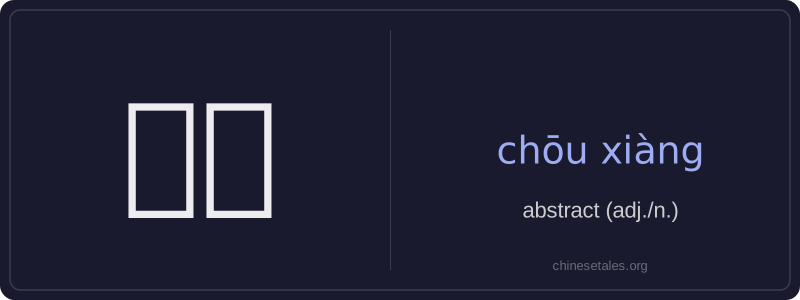
The word 抽象 (chōu xiàng) literally combines 抽 (chōu, 'to draw out, extract') and 象 (xiàng, 'image, form, appearance'). Together, they convey the idea of 'drawing out the essential form' — removing concrete details to focus on underlying ideas, patterns, or concepts. As an adjective, it describes things that are not physically tangible or visually representational, such as ideas, theories, or art styles that emphasize concept over realism.
As a noun, 抽象 refers to abstraction itself — the process or result of generalizing from specific instances, or the abstract quality of something. It's commonly used in philosophy, mathematics, linguistics, and art criticism. While the character 象 can mean 'elephant', here it functions purely as 'form' or 'appearance'; learners should not associate 抽象 with elephants despite the shared character.
Example Sentences
Related Words
国语
‘Guó yǔ’ literally means 'national language'—
面条
‘面条’ (miàn tiáo) literally means ‘flour str
背后
背后 literally means 'back + behind' and functions
认同
‘认同’ (tóng rèn) is a verb meaning ‘to ident
无论谁
‘无论谁’ (wú lùn shéi) is a pronoun meaning
中学
'Zhōngxué' literally combines 'zhōng' (middle)
见面
见面 literally means 'see face' — combining 见 (t
外语
‘外语’ literally means ‘outside language’ —