Word Explanation
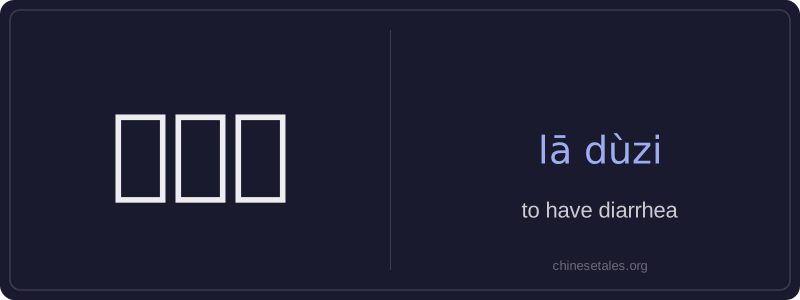
‘拉肚子’ is a common, informal Chinese verb phrase meaning 'to have diarrhea' — an uncomfortable digestive condition involving frequent, loose, or watery bowel movements. Literally, it breaks down as ‘拉’ (lā, 'to pull' or 'to pass') + ‘肚’ (dù, 'stomach' or 'abdomen') + ‘子’ (zi, a noun suffix). Though the literal meaning suggests 'pulling the stomach', the phrase functions idiomatically as a single verbal unit describing the physical act and experience of diarrhea.
This expression is widely used in everyday spoken Mandarin, especially when talking about food poisoning, viral infections, or dietary upset. It’s neutral in tone but slightly colloquial — appropriate among friends, family, or in casual medical conversations, though not typically found in formal medical reports (where terms like ‘腹泻’ xièxiè are preferred). The phrase always appears as a verb and cannot be used attributively (e.g., you wouldn’t say *拉肚子的人* without context; instead, use *拉肚子了* to indicate occurrence).
Example Sentences
Related Words
国语
‘Guó yǔ’ literally means 'national language'—
面条
‘面条’ (miàn tiáo) literally means ‘flour str
背后
背后 literally means 'back + behind' and functions
认同
‘认同’ (tóng rèn) is a verb meaning ‘to ident
无论谁
‘无论谁’ (wú lùn shéi) is a pronoun meaning
中学
'Zhōngxué' literally combines 'zhōng' (middle)
见面
见面 literally means 'see face' — combining 见 (t
外语
‘外语’ literally means ‘outside language’ —