Word Explanation
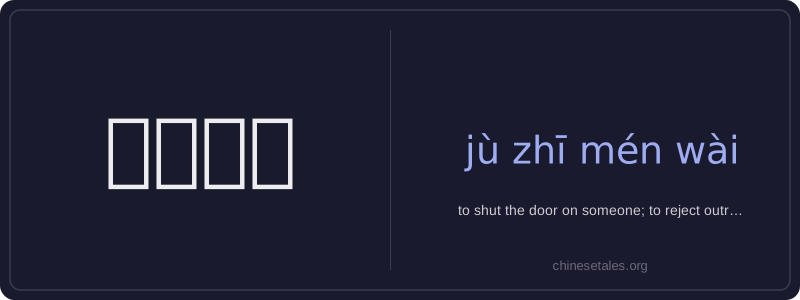
‘拒之门外’ is a four-character idiom meaning to reject someone or something outright—literally 'to shut them outside the door.' Each character contributes to this vivid image: 拒 (jù) means 'to refuse' or 'to reject'; 之 (zhī) is a classical pronoun meaning 'them' or 'it'; 门 (mén) is 'door'; and 外 (wài) means 'outside.' Together, they form a compact, formal expression emphasizing complete, often abrupt or decisive, rejection—not just saying 'no,' but actively barring entry or involvement.
This idiom is commonly used in written Chinese and formal speech, especially when describing institutional, social, or personal rejections—such as denying access, refusing collaboration, or dismissing ideas. It carries a slightly negative or critical tone, implying rigidity, coldness, or lack of openness. While rooted in physical imagery, it’s almost always used metaphorically, never for literal door-shutting unless humorously or poetically intended.
Example Sentences
Related Words
国语
‘Guó yǔ’ literally means 'national language'—
面条
‘面条’ (miàn tiáo) literally means ‘flour str
背后
背后 literally means 'back + behind' and functions
认同
‘认同’ (tóng rèn) is a verb meaning ‘to ident
无论谁
‘无论谁’ (wú lùn shéi) is a pronoun meaning
中学
'Zhōngxué' literally combines 'zhōng' (middle)
见面
见面 literally means 'see face' — combining 见 (t
外语
‘外语’ literally means ‘outside language’ —