Word Explanation
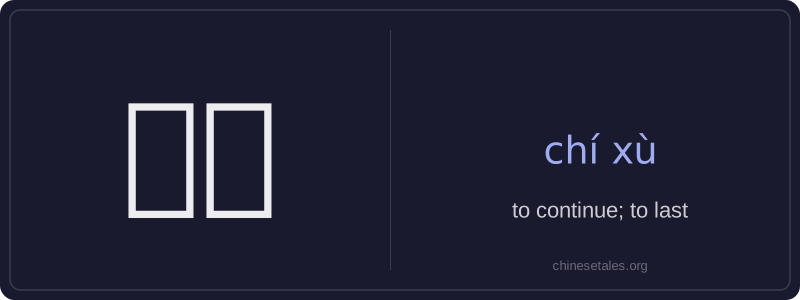
持续 (chí xù) is a verb meaning 'to continue' or 'to last' — emphasizing uninterrupted, ongoing action or state over time. The first character 持 means 'to hold' or 'to maintain', and the second 续 means 'to follow' or 'to extend'; together, they convey the idea of holding something steadily without break, like maintaining momentum or sustaining a condition. It’s commonly used in formal writing, news reports, weather forecasts, health advisories, and academic contexts — for example, to describe prolonged rain, an ongoing project, or persistent symptoms.
Unlike the more casual verb 继续 (jì xù), which often implies resuming after a pause, 持续 stresses continuity *without interruption*. It frequently appears with time phrases like '持续三天' (for three days straight) or adverbs like '持续不断地' (continuously, without stopping). While it can function as a verb on its own, it’s also common as a predicate adjective (e.g., '气温持续升高') or in compound nouns like '持续性' (continuity).
Example Sentences
Related Words
国语
‘Guó yǔ’ literally means 'national language'—
面条
‘面条’ (miàn tiáo) literally means ‘flour str
背后
背后 literally means 'back + behind' and functions
认同
‘认同’ (tóng rèn) is a verb meaning ‘to ident
无论谁
‘无论谁’ (wú lùn shéi) is a pronoun meaning
中学
'Zhōngxué' literally combines 'zhōng' (middle)
见面
见面 literally means 'see face' — combining 见 (t
外语
‘外语’ literally means ‘outside language’ —