Word Explanation
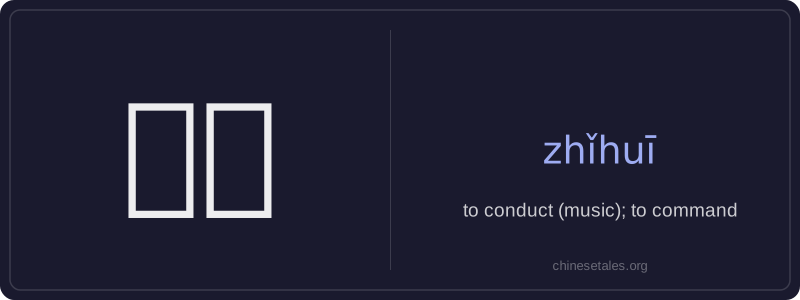
指挥 literally combines 指 (‘to point’ or ‘to indicate’) and 挥 (‘to wave’ or ‘to gesture’), evoking the physical gestures used to direct others—especially in music or military contexts. As a verb, it means ‘to conduct’ (as in conducting an orchestra) or ‘to command’ (as in leading troops or managing a project). It implies authoritative, real-time direction rather than general supervision.
The word is formal and often used in professional, artistic, or organizational settings: orchestral conductors, military officers, emergency response leaders, and project managers all 指挥. It can also appear as a noun meaning ‘command’ or ‘direction’ (e.g., 统一指挥 ‘unified command’), though its verbal use is far more common. Unlike generic verbs like 管理 (to manage) or 领导 (to lead), 指挥 emphasizes active, moment-to-moment guidance through visible cues or decisive orders.
Example Sentences
Related Words
国语
‘Guó yǔ’ literally means 'national language'—
面条
‘面条’ (miàn tiáo) literally means ‘flour str
背后
背后 literally means 'back + behind' and functions
认同
‘认同’ (tóng rèn) is a verb meaning ‘to ident
无论谁
‘无论谁’ (wú lùn shéi) is a pronoun meaning
中学
'Zhōngxué' literally combines 'zhōng' (middle)
见面
见面 literally means 'see face' — combining 见 (t
外语
‘外语’ literally means ‘outside language’ —