Word Explanation
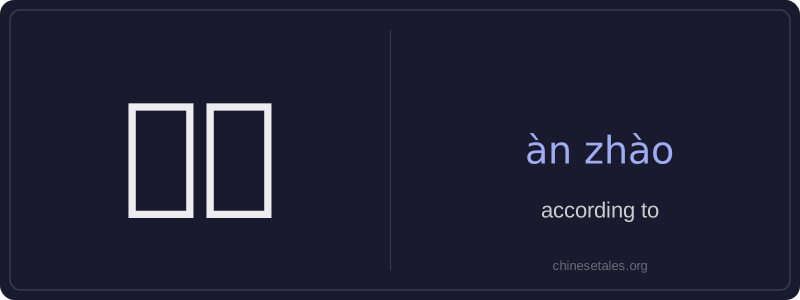
按照 is a preposition meaning 'according to', 'in accordance with', or 'following'. It introduces the standard, rule, plan, or instruction that guides an action. Though composed of two characters—按 (to press, apply, or follow) and 照 (to shine, reflect, or conform)—together they form a fixed compound expressing adherence to a reference point. It is commonly used before nouns or noun phrases like rules, schedules, instructions, or agreements.
This word appears frequently in formal and semi-formal contexts: work instructions, official notices, classroom directions, and daily planning. Unlike the more colloquial 按 (which can stand alone meaning 'press' or 'follow'), 按照 always functions as a preposition requiring an object. It cannot be used at the end of a sentence and is never followed by 的 before its object—e.g., '按照规定' (not *按照的规定). Its tone and structure convey reliability and procedural correctness, making it essential for describing orderly, rule-governed behavior.
Example Sentences
Related Words
国语
‘Guó yǔ’ literally means 'national language'—
面条
‘面条’ (miàn tiáo) literally means ‘flour str
背后
背后 literally means 'back + behind' and functions
认同
‘认同’ (tóng rèn) is a verb meaning ‘to ident
无论谁
‘无论谁’ (wú lùn shéi) is a pronoun meaning
中学
'Zhōngxué' literally combines 'zhōng' (middle)
见面
见面 literally means 'see face' — combining 见 (t
外语
‘外语’ literally means ‘outside language’ —