Word Explanation
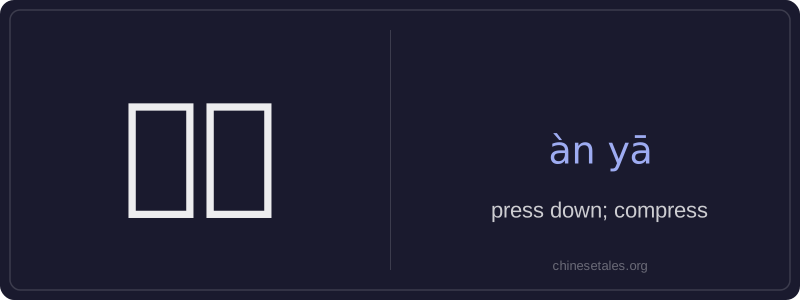
‘按压’ is a compound verb meaning to apply firm, downward pressure with the hand or fingers—often to a specific point or area of the body. The first character 按 (àn) means 'to press' or 'to push down gently but deliberately', while 压 (yā) intensifies the action, adding the sense of 'compressing', 'squeezing', or 'exerting sustained pressure'. Together, they emphasize controlled, intentional force—not light touching or tapping, but focused physical compression.
This term is especially common in health and medical contexts: for example, during CPR (cardiopulmonary resuscitation), first-aid for bleeding, acupuncture point stimulation, or self-massage techniques. It may also appear in instructions for using devices (e.g., pressing a button firmly) or in descriptions of mechanical pressure, though its dominant usage remains bodily and therapeutic. Learners should note that ‘按压’ implies purposeful, often rhythmic or sustained pressure—not casual contact.
Example Sentences
Related Words
国语
‘Guó yǔ’ literally means 'national language'—
面条
‘面条’ (miàn tiáo) literally means ‘flour str
背后
背后 literally means 'back + behind' and functions
认同
‘认同’ (tóng rèn) is a verb meaning ‘to ident
无论谁
‘无论谁’ (wú lùn shéi) is a pronoun meaning
中学
'Zhōngxué' literally combines 'zhōng' (middle)
见面
见面 literally means 'see face' — combining 见 (t
外语
‘外语’ literally means ‘outside language’ —