Word Explanation
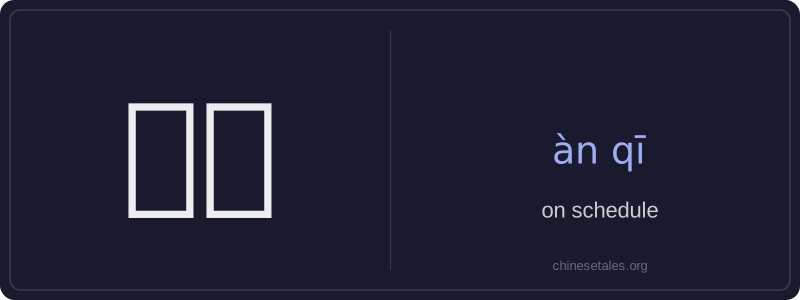
按期 means 'on schedule' or 'according to the scheduled time'. It is an adverbial phrase composed of two characters: 按 (àn), meaning 'according to' or 'in accordance with', and 期 (qī), meaning 'scheduled time', 'deadline', or 'term'. Together, they express strict adherence to a predetermined timetable — commonly used in formal, administrative, academic, or business contexts where punctuality and deadlines matter.
This phrase emphasizes reliability and obligation — for example, submitting documents, paying bills, or completing tasks by the agreed-upon date. It’s not used for casual or approximate timing (e.g., 'I’ll call you later'); instead, it implies accountability and expectation of compliance. While often paired with verbs like 完成 (wánchéng, 'to complete'), 缴纳 (jiǎonà, 'to pay'), or 提交 (tǐjiāo, 'to submit'), 按期 can also stand alone as a predicate or modifier in written and spoken Chinese.
Example Sentences
Related Words
国语
‘Guó yǔ’ literally means 'national language'—
面条
‘面条’ (miàn tiáo) literally means ‘flour str
背后
背后 literally means 'back + behind' and functions
认同
‘认同’ (tóng rèn) is a verb meaning ‘to ident
无论谁
‘无论谁’ (wú lùn shéi) is a pronoun meaning
中学
'Zhōngxué' literally combines 'zhōng' (middle)
见面
见面 literally means 'see face' — combining 见 (t
外语
‘外语’ literally means ‘outside language’ —