Word Explanation
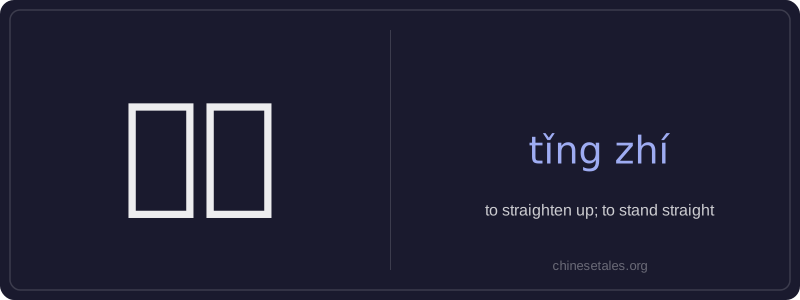
挺直 is a verb meaning 'to straighten up' or 'to stand (or sit) straight,' emphasizing an intentional, upright posture—often with connotation of alertness, confidence, or discipline. The character 挺 means 'to push out, to extend, to stand tall,' while 直 means 'straight, direct, upright.' Together, they form a compound that stresses both the physical action and the resulting posture. It's commonly used in contexts involving body alignment, such as fitness instruction, military training, posture correction, or polite social conduct.
This word often appears in imperative or descriptive sentences, especially when giving instructions ('Sit up straight!') or describing someone’s composed demeanor ('She sat挺直, looking focused and calm'). Unlike simple verbs like 站 (to stand) or 坐 (to sit), 挺直 always implies active effort to maintain vertical alignment—not just passive standing or sitting. It carries a slightly formal or disciplined tone and is rarely used for involuntary postures or non-human subjects.
Example Sentences
Related Words
国语
‘Guó yǔ’ literally means 'national language'—
面条
‘面条’ (miàn tiáo) literally means ‘flour str
背后
背后 literally means 'back + behind' and functions
认同
‘认同’ (tóng rèn) is a verb meaning ‘to ident
无论谁
‘无论谁’ (wú lùn shéi) is a pronoun meaning
中学
'Zhōngxué' literally combines 'zhōng' (middle)
见面
见面 literally means 'see face' — combining 见 (t
外语
‘外语’ literally means ‘outside language’ —