Word Explanation
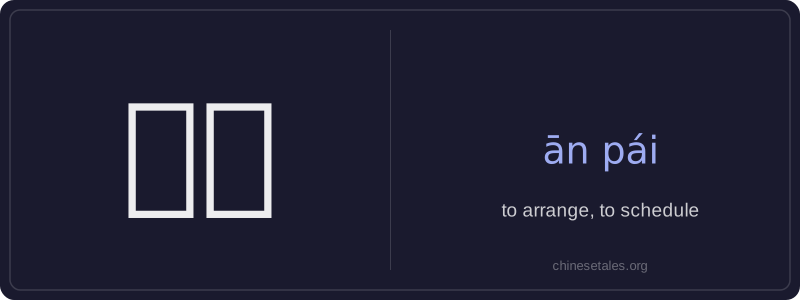
‘安排’ (ān pái) is a verb meaning 'to arrange' or 'to schedule' — used when organizing people, tasks, time, resources, or events in a planned and orderly way. The character 安 (ān) means 'peace', 'safety', or 'stability', while 排 (pái) means 'to line up', 'to place in order', or 'to assign'. Together, they convey the idea of placing things thoughtfully to achieve harmony and efficiency — not just random placement, but purposeful, responsible organization.
This word is common in both formal and informal contexts: planning meetings, assigning duties at work or home, scheduling travel, or even arranging seating for guests. It often implies authority or responsibility — the person doing the arranging usually has decision-making power. Unlike more casual verbs like 'plan' or 'set up', 安排 carries a tone of structure and intentionality, and frequently appears in written communication, official notices, and professional speech.
Example Sentences
Related Words
国语
‘Guó yǔ’ literally means 'national language'—
面条
‘面条’ (miàn tiáo) literally means ‘flour str
背后
背后 literally means 'back + behind' and functions
认同
‘认同’ (tóng rèn) is a verb meaning ‘to ident
无论谁
‘无论谁’ (wú lùn shéi) is a pronoun meaning
中学
'Zhōngxué' literally combines 'zhōng' (middle)
见面
见面 literally means 'see face' — combining 见 (t
外语
‘外语’ literally means ‘outside language’ —