Word Explanation
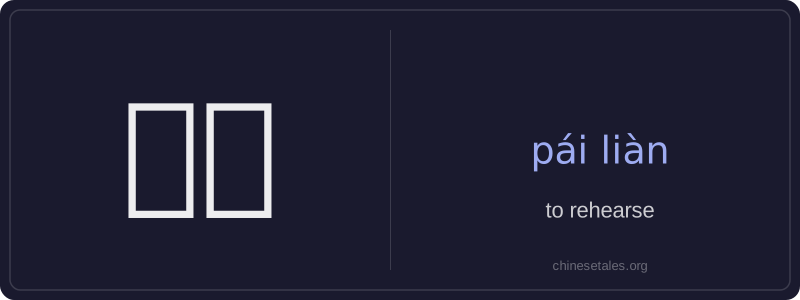
‘排练’ (pái liàn) is a verb meaning ‘to rehearse’—to practice a performance, speech, or presentation before the actual event. The first character 排 (pái) originally means ‘to line up’ or ‘to arrange’, suggesting organizing performers or sequences; the second character 练 (liàn) means ‘to practice’ or ‘to train’, emphasizing repetition and skill development. Together, they convey the idea of structured, preparatory practice—especially for stage performances, music, dance, or public speaking.
This word is commonly used in formal or semi-formal contexts: school plays, choir concerts, corporate presentations, or competition preparations. It implies purposeful, often group-based practice under guidance—not casual or solitary practice (which would more likely use 练习). While it can be used transitively (e.g., 排练节目), it’s frequently followed by an object like 话剧 (huàjù, play), 歌曲 (gēqǔ, song), or 演讲 (yǎnjiǎng, speech), and may appear with time/duration markers like 每天 (every day) or 两个小时 (two hours).
Example Sentences
Related Words
国语
‘Guó yǔ’ literally means 'national language'—
面条
‘面条’ (miàn tiáo) literally means ‘flour str
背后
背后 literally means 'back + behind' and functions
认同
‘认同’ (tóng rèn) is a verb meaning ‘to ident
无论谁
‘无论谁’ (wú lùn shéi) is a pronoun meaning
中学
'Zhōngxué' literally combines 'zhōng' (middle)
见面
见面 literally means 'see face' — combining 见 (t
外语
‘外语’ literally means ‘outside language’ —