Word Explanation
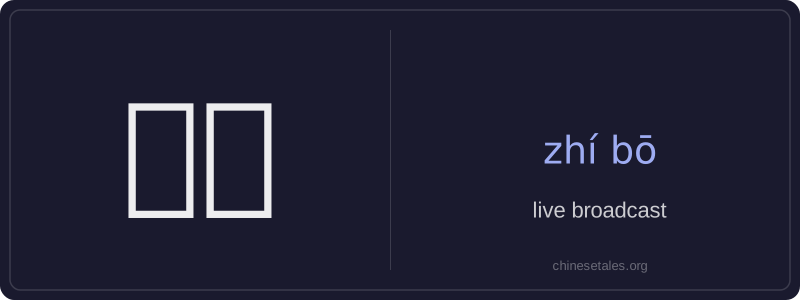
'直播' literally means 'direct broadcast' — 直 (zhí) means 'direct' or 'immediate', and 播 (bō) means 'to broadcast' or 'to air'. Together, they refer to media content transmitted in real time as it happens, without delay or editing. This term is widely used for online video streams, such as live gaming, cooking demonstrations, news reporting, or celebrity Q&As.
Unlike recorded videos (录播 lù bō), 直播 emphasizes immediacy, interactivity (e.g., viewers sending comments or virtual gifts), and authenticity. It’s common on platforms like Douyin, Bilibili, and Taobao Live. While originally technical, 直播 has become part of everyday digital life in China — people even use it to share personal moments, like hiking or studying.
Example Sentences
Related Words
国语
‘Guó yǔ’ literally means 'national language'—
面条
‘面条’ (miàn tiáo) literally means ‘flour str
背后
背后 literally means 'back + behind' and functions
认同
‘认同’ (tóng rèn) is a verb meaning ‘to ident
无论谁
‘无论谁’ (wú lùn shéi) is a pronoun meaning
中学
'Zhōngxué' literally combines 'zhōng' (middle)
见面
见面 literally means 'see face' — combining 见 (t
外语
‘外语’ literally means ‘outside language’ —