Word Explanation
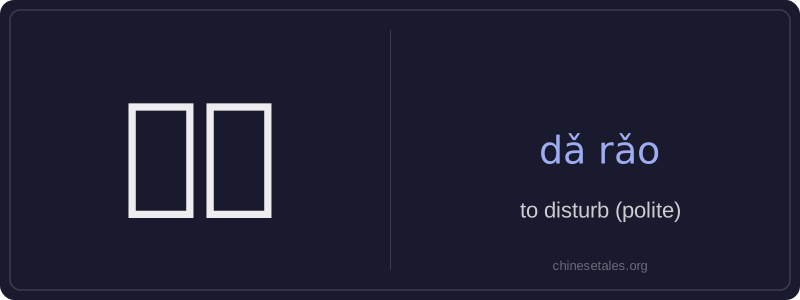
打扰 (dǎ rǎo) is a polite, modest verb meaning 'to disturb' or 'to bother' — used when interrupting someone’s time, space, or activity. Literally, 打 (dǎ) means 'to strike' or 'to initiate an action', and 扰 (rǎo) means 'to disturb' or 'to disrupt'; together, they form a compound emphasizing an unintentional, socially sensitive intrusion. It carries strong connotations of humility and apology, and is almost always used in self-referential or apologetic contexts — for example, before asking a question, entering a room, or making a phone call.
This word is essential in everyday polite interaction: it softens requests, acknowledges the other person’s convenience, and reflects Chinese cultural values of respect and social harmony. You’ll hear it frequently in service settings, office communication, and casual conversations where courtesy matters. It’s rarely used to describe serious or aggressive disruption — for that, words like 打断 (dǎ duàn) or 干扰 (gān rǎo) are more appropriate. The tone is consistently deferential, never accusatory.
Example Sentences
Related Words
国语
‘Guó yǔ’ literally means 'national language'—
面条
‘面条’ (miàn tiáo) literally means ‘flour str
背后
背后 literally means 'back + behind' and functions
认同
‘认同’ (tóng rèn) is a verb meaning ‘to ident
无论谁
‘无论谁’ (wú lùn shéi) is a pronoun meaning
中学
'Zhōngxué' literally combines 'zhōng' (middle)
见面
见面 literally means 'see face' — combining 见 (t
外语
‘外语’ literally means ‘outside language’ —