Word Explanation
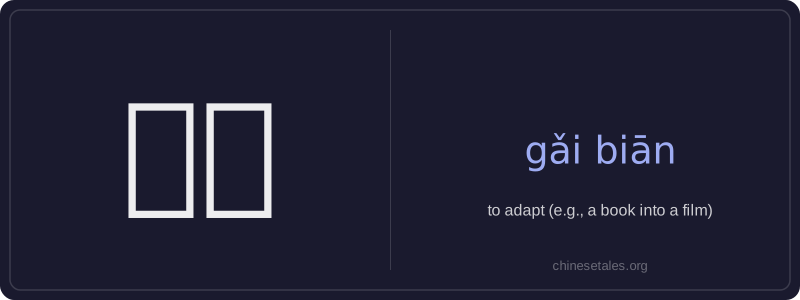
‘改编’ (gǎi biān) is a verb meaning ‘to adapt’—specifically, to transform an original work (like a novel, play, or historical event) into a new format or medium while preserving its core content and spirit. The character 改 (gǎi) means ‘to change’ or ‘to revise’, and 编 (biān) means ‘to compile’, ‘to write’, or ‘to compose’. Together, they convey the idea of reworking existing material through creative editing and restructuring—not mere translation, but thoughtful reinterpretation for a new audience or context.
This word is commonly used in cultural and media contexts: films adapted from novels, stage plays based on real-life events, or textbooks revised for different grade levels. It implies intentionality and authorial agency; the adapter makes deliberate choices about what to keep, omit, or emphasize. Unlike ‘translation’ (翻译), which focuses on linguistic equivalence, ‘改编’ centers on functional and artistic transformation across forms.
Example Sentences
Related Words
国语
‘Guó yǔ’ literally means 'national language'—
面条
‘面条’ (miàn tiáo) literally means ‘flour str
背后
背后 literally means 'back + behind' and functions
认同
‘认同’ (tóng rèn) is a verb meaning ‘to ident
无论谁
‘无论谁’ (wú lùn shéi) is a pronoun meaning
中学
'Zhōngxué' literally combines 'zhōng' (middle)
见面
见面 literally means 'see face' — combining 见 (t
外语
‘外语’ literally means ‘outside language’ —