Word Explanation
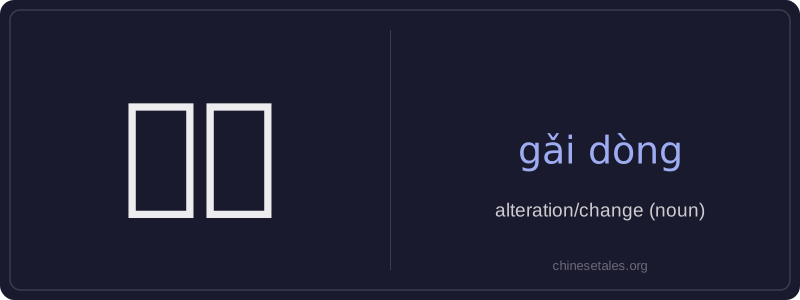
‘改动’ (gǎi dòng) is a noun meaning ‘alteration’ or ‘change’, especially one that modifies an existing plan, text, design, or arrangement. It combines the characters 改 (gǎi), meaning ‘to change’ or ‘to revise’, and 动 (dòng), meaning ‘to move’ or ‘to act’—together suggesting an active, deliberate modification rather than a passive shift. The word implies intentionality and often carries a neutral-to-formal tone.
It’s commonly used in contexts like editing documents, adjusting schedules, updating software, or modifying rules or policies. While it can refer to small tweaks or major overhauls, it usually suggests the original structure remains largely intact. Unlike more general words like ‘变化’ (biàn huà), which refers to natural or spontaneous change, ‘改动’ emphasizes human-initiated intervention and is frequently paired with verbs like ‘做’ (zuò, ‘to make’) or ‘有’ (yǒu, ‘to have’), as in ‘做了些改动’ (made some alterations).
Example Sentences
Related Words
国语
‘Guó yǔ’ literally means 'national language'—
面条
‘面条’ (miàn tiáo) literally means ‘flour str
背后
背后 literally means 'back + behind' and functions
认同
‘认同’ (tóng rèn) is a verb meaning ‘to ident
无论谁
‘无论谁’ (wú lùn shéi) is a pronoun meaning
中学
'Zhōngxué' literally combines 'zhōng' (middle)
见面
见面 literally means 'see face' — combining 见 (t
外语
‘外语’ literally means ‘outside language’ —