Word Explanation
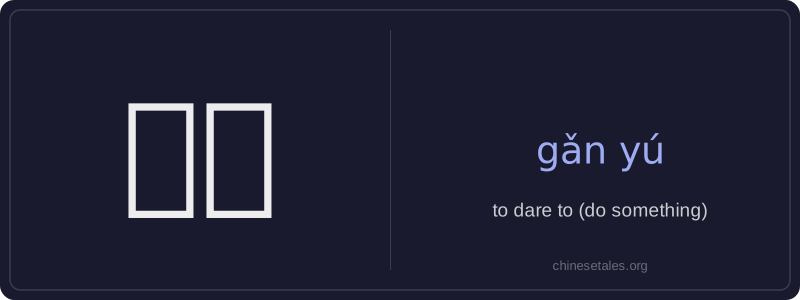
敢于 (gǎn yú) is a verb meaning 'to dare to' or 'to have the courage to' do something. It combines 敢 (gǎn), which means 'to dare' or 'to have the courage', and 于 (yú), a classical preposition that here functions as a grammatical particle linking the verb with the following action. Unlike standalone 敢, which often appears in questions or negatives (e.g., 你敢吗?/ 不敢), 敢于 emphasizes active, positive courage — usually before a verb phrase (e.g., 敢于承认错误, 敢于尝试). It carries a formal or literary tone and is common in written Chinese, speeches, and motivational contexts.
This expression highlights moral or psychological bravery rather than physical risk. It’s frequently used in discussions about personal growth, social responsibility, innovation, or confronting injustice. Because of its elevated register, it rarely appears in casual daily speech among friends but is widely understood and valued in educational, professional, and media settings.
Example Sentences
Related Words
国语
‘Guó yǔ’ literally means 'national language'—
面条
‘面条’ (miàn tiáo) literally means ‘flour str
背后
背后 literally means 'back + behind' and functions
认同
‘认同’ (tóng rèn) is a verb meaning ‘to ident
无论谁
‘无论谁’ (wú lùn shéi) is a pronoun meaning
中学
'Zhōngxué' literally combines 'zhōng' (middle)
见面
见面 literally means 'see face' — combining 见 (t
外语
‘外语’ literally means ‘outside language’ —