Word Explanation
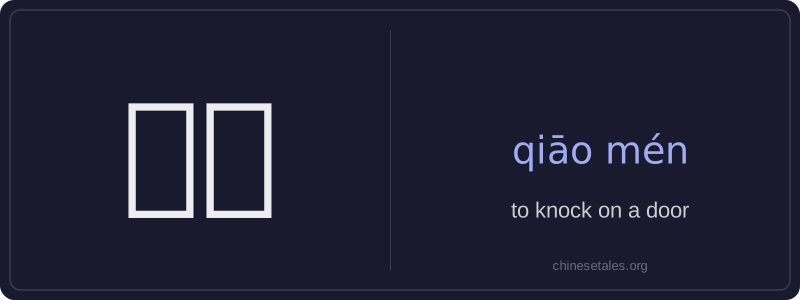
‘敲门’ literally means ‘to strike a door’ — ‘敲’ (qiāo) means ‘to knock, tap, or strike,’ and ‘门’ (mén) means ‘door.’ Together, they form a common verb meaning ‘to knock on a door,’ used when someone signals their presence before entering a room, house, or office. It’s a polite and expected action in Chinese culture, especially before entering private spaces like bedrooms or offices.
The phrase is almost always used as a verb in the predicate position and can be modified by aspect particles like ‘了’ (le), ‘过’ (guò), or ‘在’ (zài). It does not function as a noun or adjective. While ‘敲’ alone can mean ‘to knock’ on various surfaces (e.g., a table), ‘敲门’ specifically refers only to knocking on doors — never on walls, windows, or other objects. It’s neutral in register and appropriate for both formal and informal speech.
Example Sentences
Related Words
国语
‘Guó yǔ’ literally means 'national language'—
面条
‘面条’ (miàn tiáo) literally means ‘flour str
背后
背后 literally means 'back + behind' and functions
认同
‘认同’ (tóng rèn) is a verb meaning ‘to ident
无论谁
‘无论谁’ (wú lùn shéi) is a pronoun meaning
中学
'Zhōngxué' literally combines 'zhōng' (middle)
见面
见面 literally means 'see face' — combining 见 (t
外语
‘外语’ literally means ‘outside language’ —