Word Explanation
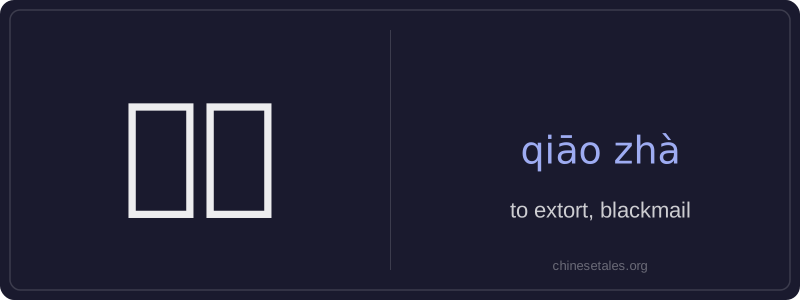
‘敲诈’ is a verb meaning ‘to extort’ or ‘to blackmail’—forcing someone to give money, property, or concessions through threats, intimidation, or coercion. The first character 敲 (qiāo) literally means ‘to strike’ or ‘to knock’, suggesting forceful pressure; the second character 诈 (zhà) means ‘to cheat’, ‘to deceive’, or ‘to swindle’. Together, they evoke the idea of using aggressive, deceptive tactics to extract something unwillingly from another person. It is commonly used in legal, journalistic, and everyday contexts involving crime, corruption, or unethical demands.
This word carries strong negative connotations and implies illegality or serious moral violation. It is not used for minor persuasion or negotiation—it specifically denotes coercive, threatening behavior. While it can appear in both spoken and written Chinese, it is more frequent in formal reporting or serious discussions than in casual conversation.
Example Sentences
Related Words
国语
‘Guó yǔ’ literally means 'national language'—
面条
‘面条’ (miàn tiáo) literally means ‘flour str
背后
背后 literally means 'back + behind' and functions
认同
‘认同’ (tóng rèn) is a verb meaning ‘to ident
无论谁
‘无论谁’ (wú lùn shéi) is a pronoun meaning
中学
'Zhōngxué' literally combines 'zhōng' (middle)
见面
见面 literally means 'see face' — combining 见 (t
外语
‘外语’ literally means ‘outside language’ —