Word Explanation
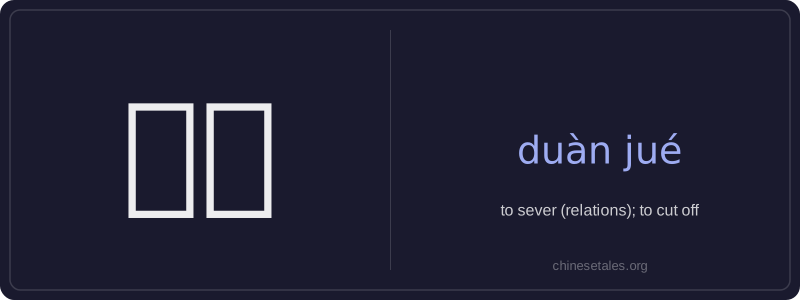
‘断绝’ is a compound verb meaning 'to sever' or 'to cut off'—typically used for relationships, communication, support, or connections that are deliberately and completely ended. The character 断 (duàn) means 'to break' or 'to interrupt', while 绝 (jué) means 'to exhaust', 'to terminate', or 'to cut off entirely'. Together, they emphasize finality and irrevocability—not just pausing, but ending something permanently.
This word carries strong emotional weight and formal tone, often appearing in serious contexts: ending family ties, terminating diplomatic relations, cutting off financial aid, or abandoning harmful habits. It’s rarely used for casual or temporary separations—those would use milder terms like ‘暂停’ (pause) or ‘中断’ (interrupt). ‘断绝’ implies intention, gravity, and often emotional distance or moral judgment, making it common in literature, news reports, and official statements.
Example Sentences
Related Words
国语
‘Guó yǔ’ literally means 'national language'—
面条
‘面条’ (miàn tiáo) literally means ‘flour str
背后
背后 literally means 'back + behind' and functions
认同
‘认同’ (tóng rèn) is a verb meaning ‘to ident
无论谁
‘无论谁’ (wú lùn shéi) is a pronoun meaning
中学
'Zhōngxué' literally combines 'zhōng' (middle)
见面
见面 literally means 'see face' — combining 见 (t
外语
‘外语’ literally means ‘outside language’ —