Word Explanation
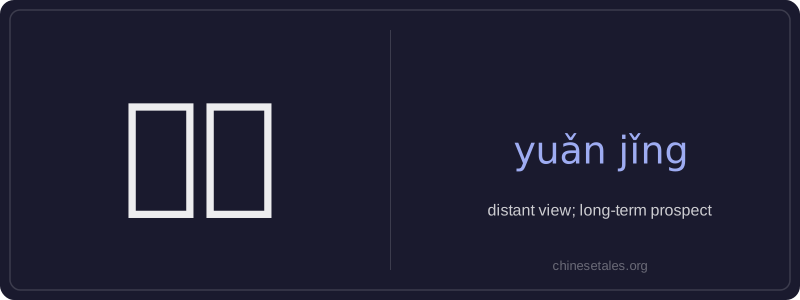
'远景' literally combines '远' (yuǎn), meaning 'distant' or 'far', and '景' (jǐng), meaning 'view', 'scene', or 'sight'. Together, it refers to what lies far away visually — a distant landscape — but is more commonly used metaphorically to mean 'long-term prospect' or 'vision for the future', especially in planning, policy, or personal goals. The word evokes breadth, time horizon, and aspiration.
In everyday usage, '远景' appears frequently in formal or semi-formal contexts: government development plans, corporate strategy documents, academic discussions, or personal reflections about life direction. It contrasts with '近景' (jǐn jǐng, 'close-up view' or 'short-term outlook') and carries a sense of ambition and forward-looking clarity. While it can describe an actual scenic view (e.g., from a mountain top), its abstract use vastly dominates modern written and spoken Chinese.
Example Sentences
Related Words
国语
‘Guó yǔ’ literally means 'national language'—
面条
‘面条’ (miàn tiáo) literally means ‘flour str
背后
背后 literally means 'back + behind' and functions
认同
‘认同’ (tóng rèn) is a verb meaning ‘to ident
无论谁
‘无论谁’ (wú lùn shéi) is a pronoun meaning
中学
'Zhōngxué' literally combines 'zhōng' (middle)
见面
见面 literally means 'see face' — combining 见 (t
外语
‘外语’ literally means ‘outside language’ —