Word Explanation
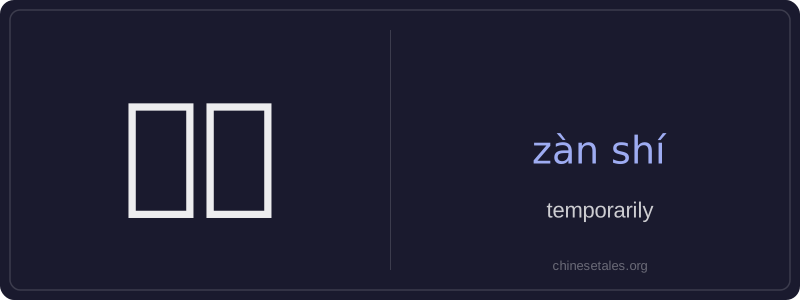
暂时 (zàn shí) is an adverb meaning 'temporarily' or 'for the time being.' It combines two characters: 暂 (zàn), which conveys brevity or short duration, and 时 (shí), meaning 'time.' Together, they emphasize a limited, provisional period—not permanent, but not necessarily very brief either. It often implies that the current situation is subject to change or will be resolved later.
This word is commonly used in both spoken and written Chinese, especially in formal or neutral contexts—such as announcements, explanations, or polite requests. It frequently appears before verbs (e.g., 暂时离开, 暂时关闭) or adjectives (e.g., 暂时困难), and it can also modify entire clauses. Unlike colloquial alternatives like 先 (xiān, 'for now'), 暂时 carries a slightly more formal and precise nuance of temporariness grounded in objective circumstances rather than personal intention.
Example Sentences
Related Words
国语
‘Guó yǔ’ literally means 'national language'—
面条
‘面条’ (miàn tiáo) literally means ‘flour str
背后
背后 literally means 'back + behind' and functions
认同
‘认同’ (tóng rèn) is a verb meaning ‘to ident
无论谁
‘无论谁’ (wú lùn shéi) is a pronoun meaning
中学
'Zhōngxué' literally combines 'zhōng' (middle)
见面
见面 literally means 'see face' — combining 见 (t
外语
‘外语’ literally means ‘outside language’ —