Word Explanation
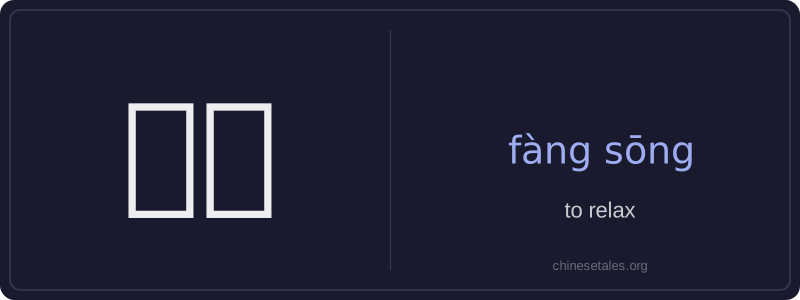
放松 (fàng sōng) is a verb meaning 'to relax' — literally 'to release tension'. The first character 放 (fàng) means 'to release, let go, or set free', and the second 松 (sōng) means 'loose, slack, or relaxed'. Together, they form a compound that expresses the physical and mental act of easing tension, unwinding, or calming down. It’s commonly used in contexts related to stress relief, wellness, and daily self-care — for example, after work, during meditation, or before sleep.
This word often appears with objects like 肌肉 (jīròu, 'muscles'), 心情 (xīnqíng, 'mood'), or 身心 (shēnxīn, 'body and mind'), and can also be used reflexively or intransitively. While it carries a neutral-to-positive tone, it’s not typically used for sudden or dramatic emotional shifts — more for intentional, gentle unwinding. It’s widely understood across all age groups and registers, from casual speech to health education materials.
Example Sentences
Related Words
国语
‘Guó yǔ’ literally means 'national language'—
面条
‘面条’ (miàn tiáo) literally means ‘flour str
背后
背后 literally means 'back + behind' and functions
认同
‘认同’ (tóng rèn) is a verb meaning ‘to ident
无论谁
‘无论谁’ (wú lùn shéi) is a pronoun meaning
中学
'Zhōngxué' literally combines 'zhōng' (middle)
见面
见面 literally means 'see face' — combining 见 (t
外语
‘外语’ literally means ‘outside language’ —