Word Explanation
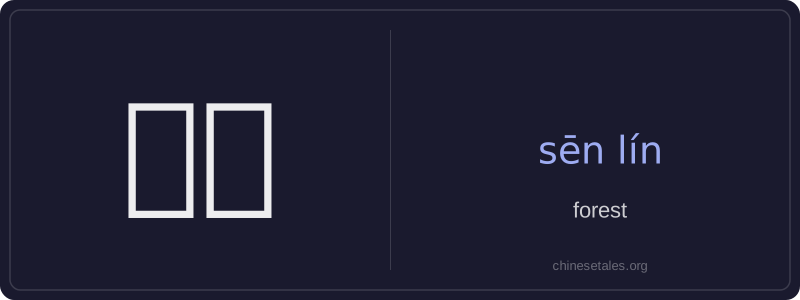
森林 (sēn lín) means 'forest' — a large area covered with trees and undergrowth. The word is a reduplicative compound: both characters mean 'trees' or 'grove'. 森 consists of three 木 (mù, 'tree') radicals stacked, suggesting density and abundance; 林 combines two 木, meaning 'grove' or 'cluster of trees'. Together, they intensify the sense of vastness, thickness, and natural richness — not just any group of trees, but a mature, ecologically complex woodland.
This term is used in formal, descriptive, scientific, and ecological contexts — for example, when discussing biodiversity, conservation, climate, or geography. It appears in official names like 'national forest park' (国家森林公园) and environmental reports. While colloquially people may say 树林 (shù lín) for smaller wooded areas, 森林 implies scale, wildness, and ecological significance — think tropical rainforests, boreal forests, or ancient temperate woodlands.
Example Sentences
Related Words
国语
‘Guó yǔ’ literally means 'national language'—
面条
‘面条’ (miàn tiáo) literally means ‘flour str
背后
背后 literally means 'back + behind' and functions
认同
‘认同’ (tóng rèn) is a verb meaning ‘to ident
无论谁
‘无论谁’ (wú lùn shéi) is a pronoun meaning
中学
'Zhōngxué' literally combines 'zhōng' (middle)
见面
见面 literally means 'see face' — combining 见 (t
外语
‘外语’ literally means ‘outside language’ —