Word Explanation
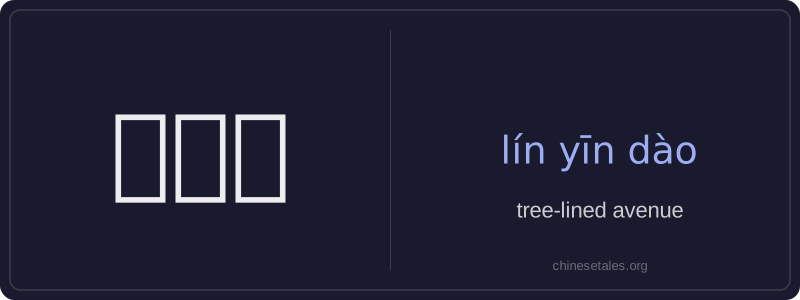
林荫道 literally combines three characters: 林 (lín, 'grove' or 'forest'), 荫 (yīn, 'shade' or 'shelter from sunlight'), and 道 (dào, 'road' or 'avenue'). Together, they describe a wide road lined with tall, leafy trees whose canopies create continuous shade — a classic feature of many Chinese cities and university campuses. It evokes tranquility, greenery, and urban livability.
This term is used almost exclusively for formal or scenic thoroughfares — not narrow alleys or rural paths. You’ll often see it in place names (e.g., Beijing’s Xizhimen Lin Yindao), travel descriptions, and literature emphasizing natural beauty within urban settings. While similar to 'boulevard' or 'promenade', 林荫道 specifically emphasizes the cooling, protective effect of mature tree cover — a valued feature in hot summers.
Example Sentences
Related Words
国语
‘Guó yǔ’ literally means 'national language'—
面条
‘面条’ (miàn tiáo) literally means ‘flour str
背后
背后 literally means 'back + behind' and functions
认同
‘认同’ (tóng rèn) is a verb meaning ‘to ident
无论谁
‘无论谁’ (wú lùn shéi) is a pronoun meaning
中学
'Zhōngxué' literally combines 'zhōng' (middle)
见面
见面 literally means 'see face' — combining 见 (t
外语
‘外语’ literally means ‘outside language’ —