Word Explanation
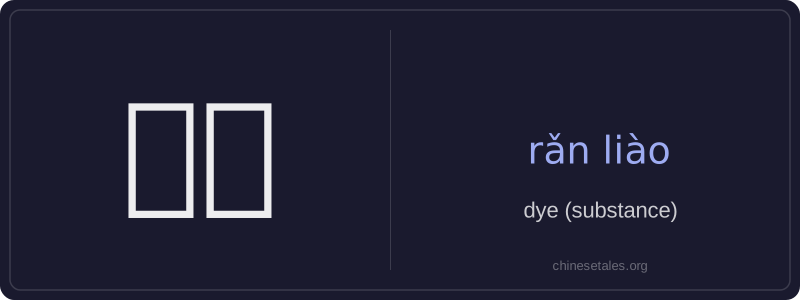
‘染料’ (rǎn liào) is a compound noun meaning ‘dye’ — a substance used to add color to textiles, paper, food, or other materials. The first character 染 (rǎn) means ‘to dye’ or ‘to stain’, and the second character 料 (liào) means ‘material’ or ‘substance’. Together, they literally mean ‘dyeing material’, emphasizing its functional purpose rather than just appearance. Historically, many dyes were extracted from plants (e.g., indigo, madder root) or minerals, which is why this word commonly appears in contexts related to traditional crafts, textile production, and natural pigments.
Modern usage includes both natural and synthetic dyes. While ‘染料’ refers specifically to coloring agents used in industrial or artisanal processes, it is distinct from everyday color words like 颜色 (yánsè, ‘color’) or paint terms like 油漆 (yóuqī, ‘paint’). It’s a formal, technical term — you’d use it when discussing manufacturing, chemistry, or cultural heritage, not casual conversation about choosing a shirt color.
Example Sentences
Related Words
国语
‘Guó yǔ’ literally means 'national language'—
面条
‘面条’ (miàn tiáo) literally means ‘flour str
背后
背后 literally means 'back + behind' and functions
认同
‘认同’ (tóng rèn) is a verb meaning ‘to ident
无论谁
‘无论谁’ (wú lùn shéi) is a pronoun meaning
中学
'Zhōngxué' literally combines 'zhōng' (middle)
见面
见面 literally means 'see face' — combining 见 (t
外语
‘外语’ literally means ‘outside language’ —