Word Explanation
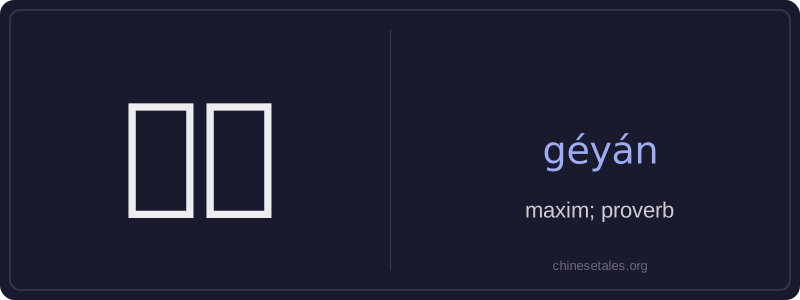
‘格言’ (géyán) is a noun meaning ‘maxim’ or ‘proverb’ — a concise, wise saying that expresses a general truth or principle about life, ethics, or conduct. The character 格 (gé) originally means ‘pattern,’ ‘standard,’ or ‘to investigate thoroughly,’ suggesting something foundational or exemplary; 言 (yán) means ‘speech’ or ‘words.’ Together, they convey ‘words that set a standard’ — enduring expressions of wisdom passed down through generations.
格言 are commonly quoted in education, moral instruction, self-improvement, and daily conversation to offer guidance or encouragement. Unlike idioms (成语), which often have historical or literary origins and fixed structures, 格言 tend to be more direct, didactic, and universally applicable — for example, ‘学而不思则罔’ (‘Learning without thinking leads to confusion’) is a classic 格言 from Confucius. They appear frequently in textbooks, posters, speeches, and parental advice.
Example Sentences
Related Words
国语
‘Guó yǔ’ literally means 'national language'—
面条
‘面条’ (miàn tiáo) literally means ‘flour str
背后
背后 literally means 'back + behind' and functions
认同
‘认同’ (tóng rèn) is a verb meaning ‘to ident
无论谁
‘无论谁’ (wú lùn shéi) is a pronoun meaning
中学
'Zhōngxué' literally combines 'zhōng' (middle)
见面
见面 literally means 'see face' — combining 见 (t
外语
‘外语’ literally means ‘outside language’ —