Word Explanation
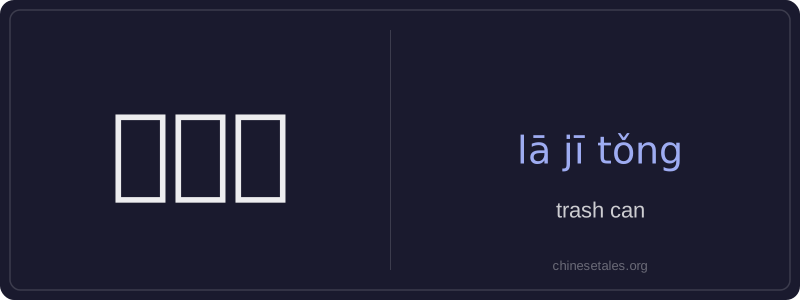
'Lā jī tǒng' literally combines three characters: 'lā jī' (trash, garbage) and 'tǒng' (bucket, can). Though 'lā jī' is a compound word itself—'lā' meaning 'to pull/drag' (here used phonetically) and 'jī' historically linked to 'dust' or 'refuse'—together they form the standard term for household or public waste receptacles. The final character 'tǒng' specifies the container type, emphasizing its function as a cylindrical or open-topped vessel for temporary disposal.
This noun is neutral in register and widely used across mainland China, Taiwan, and Singapore. It appears in everyday contexts like homes, offices, streets, and schools. Unlike more formal terms such as 'waste bin' in English, 'lā jī tǒng' carries no stylistic weight—it’s practical, unambiguous, and appropriate for all ages and situations. You’ll often see it paired with verbs like 'fàng' (to place), 'dǎ kāi' (to open), or 'qīng kōng' (to empty).
Example Sentences
Related Words
国语
‘Guó yǔ’ literally means 'national language'—
面条
‘面条’ (miàn tiáo) literally means ‘flour str
背后
背后 literally means 'back + behind' and functions
认同
‘认同’ (tóng rèn) is a verb meaning ‘to ident
无论谁
‘无论谁’ (wú lùn shéi) is a pronoun meaning
中学
'Zhōngxué' literally combines 'zhōng' (middle)
见面
见面 literally means 'see face' — combining 见 (t
外语
‘外语’ literally means ‘outside language’ —