Word Explanation
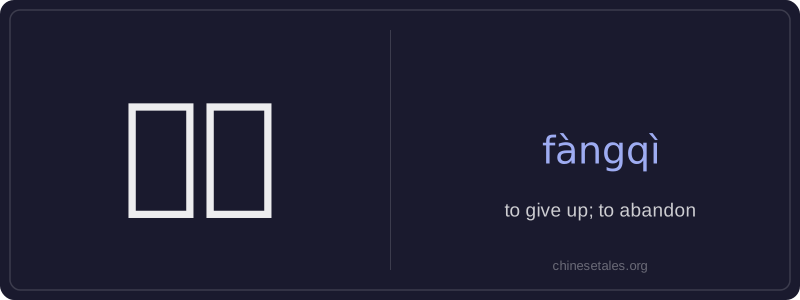
‘放弃’ (fàngqì) is a compound verb meaning ‘to give up’ or ‘to abandon’ something — whether a goal, a habit, a relationship, or even an object. The first character 放 (fàng) means ‘to release’ or ‘to let go’, and the second 弃 (qì) means ‘to discard’ or ‘to forsake’. Together, they convey a strong sense of deliberate relinquishment, often implying resignation, pragmatism, or acceptance of impossibility. It’s commonly used in contexts involving effort, commitment, or emotional investment — for example, stopping a long-held pursuit or ending a difficult endeavor.
This word carries a neutral-to-slightly-negative connotation; it’s not inherently shameful but suggests recognition that continuing is no longer feasible or worthwhile. Unlike casual phrases like ‘quit’ or ‘drop’, 放弃 implies seriousness and finality — you don’t ‘partially’ 放弃 something. It frequently appears after subjects like 我, 他, or the organization, and is followed by a noun (e.g., 梦想, 计划, 治疗) or a verb phrase marked with 了 or 过 to indicate completion.
Example Sentences
Related Words
国语
‘Guó yǔ’ literally means 'national language'—
面条
‘面条’ (miàn tiáo) literally means ‘flour str
背后
背后 literally means 'back + behind' and functions
认同
‘认同’ (tóng rèn) is a verb meaning ‘to ident
无论谁
‘无论谁’ (wú lùn shéi) is a pronoun meaning
中学
'Zhōngxué' literally combines 'zhōng' (middle)
见面
见面 literally means 'see face' — combining 见 (t
外语
‘外语’ literally means ‘outside language’ —