Word Explanation
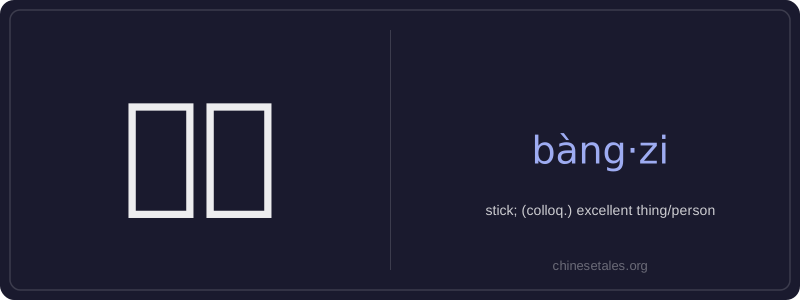
棒子 (bàng·zi) literally means 'stick' or 'rod' — a slender, rigid object, often made of wood or metal. The character 棒 (bàng) originally refers to a thick, sturdy pole, while 子 (zi) is a common noun suffix that nominalizes the root, giving it a colloquial, concrete feel. As a standalone noun, it’s used for everyday objects like walking sticks, drumsticks, or even chopsticks in some dialects.
In informal spoken Mandarin, 棒子 has taken on a positive slang meaning: 'an excellent thing' or 'a top-notch person'. This usage is emphatic and affectionate, similar to English expressions like 'a real gem' or 'a total rockstar'. It’s especially common among young people when praising skills, performance, or personality — e.g., calling someone a 好棒子 (hǎo bàng·zi) to mean 'such an awesome person'. Note that this figurative sense only appears in casual speech and never in formal writing.
Example Sentences
Related Words
国语
‘Guó yǔ’ literally means 'national language'—
面条
‘面条’ (miàn tiáo) literally means ‘flour str
背后
背后 literally means 'back + behind' and functions
认同
‘认同’ (tóng rèn) is a verb meaning ‘to ident
无论谁
‘无论谁’ (wú lùn shéi) is a pronoun meaning
中学
'Zhōngxué' literally combines 'zhōng' (middle)
见面
见面 literally means 'see face' — combining 见 (t
外语
‘外语’ literally means ‘outside language’ —