Word Explanation
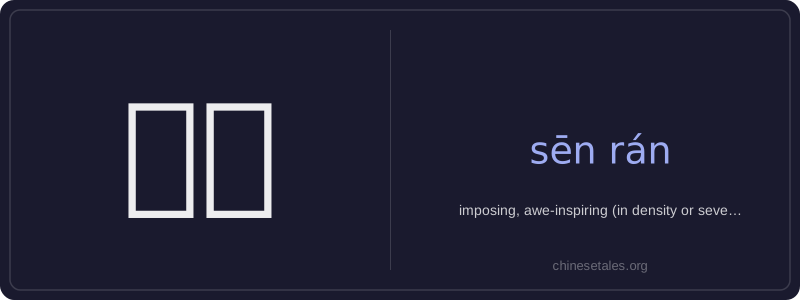
森然 (sēn rán) is an adjective describing something dense, towering, and deeply imposing—often evoking awe or even slight unease. The first character 森 (sēn) means 'lush forest' and conveys thick, layered abundance; the second, 然 (rán), is a classical suffix meaning 'in the manner of' or 'thus'. Together, they paint an image of overwhelming natural density—like towering ancient trees crowding a misty mountain slope—or metaphorically, severity so palpable it feels physical, as in strict laws or solemn rituals.
This word carries literary and slightly formal weight; it appears more often in descriptive writing, poetry, historical narratives, or rhetorical speech than in casual conversation. It emphasizes visual or atmospheric intensity rather than emotion per se—though the effect on the observer is often emotional (awe, reverence, or intimidation). While originally tied to forests, modern usage extends to architecture, crowds, or abstract forces like authority or fate when they appear vast, unbroken, and formidable.
Example Sentences
Related Words
国语
‘Guó yǔ’ literally means 'national language'—
面条
‘面条’ (miàn tiáo) literally means ‘flour str
背后
背后 literally means 'back + behind' and functions
认同
‘认同’ (tóng rèn) is a verb meaning ‘to ident
无论谁
‘无论谁’ (wú lùn shéi) is a pronoun meaning
中学
'Zhōngxué' literally combines 'zhōng' (middle)
见面
见面 literally means 'see face' — combining 见 (t
外语
‘外语’ literally means ‘outside language’ —