Word Explanation
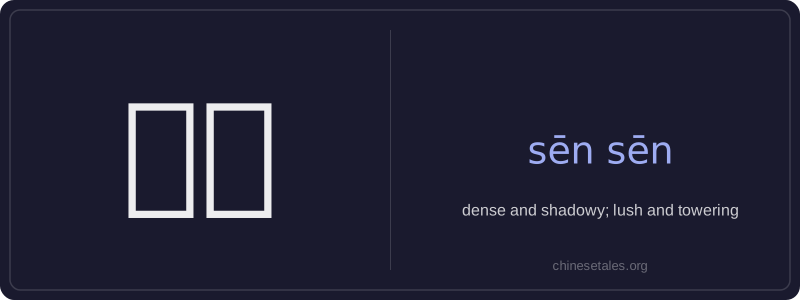
森森 is a reduplicative adjective formed by repeating the character 森 (sēn), which itself means 'dense forest' or 'lush and towering trees'. As a reduplication, 森森 intensifies the imagery—evoking deep, shadowy, thickly wooded areas where tall trees stand closely together, blocking much light and creating a hushed, mysterious atmosphere. It emphasizes visual density, verticality, and natural abundance, often carrying poetic or literary resonance.
This word is commonly used in descriptive writing—especially poetry, travel essays, or nature documentaries—to portray ancient forests, mountain groves, or secluded bamboo stands. It rarely appears in casual speech but is frequent in formal, evocative, or classical-influenced contexts. While it literally relates to trees and vegetation, it can occasionally extend metaphorically to suggest something imposing or overwhelming in scale or presence, though such usage remains rare and stylistically marked.
Example Sentences
Related Words
国语
‘Guó yǔ’ literally means 'national language'—
面条
‘面条’ (miàn tiáo) literally means ‘flour str
背后
背后 literally means 'back + behind' and functions
认同
‘认同’ (tóng rèn) is a verb meaning ‘to ident
无论谁
‘无论谁’ (wú lùn shéi) is a pronoun meaning
中学
'Zhōngxué' literally combines 'zhōng' (middle)
见面
见面 literally means 'see face' — combining 见 (t
外语
‘外语’ literally means ‘outside language’ —