Word Explanation
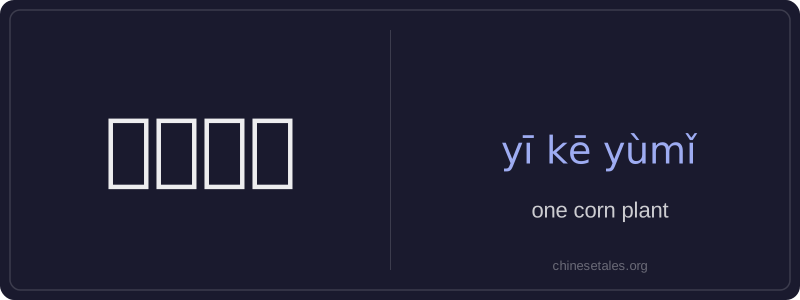
'Yī kē yùmǐ' literally means 'one corn plant' — not an ear of corn or a kernel, but the entire living plant, including stalk, leaves, tassel, and ears. The measure word 'kē' is used for trees, shrubs, and tall, upright plants with trunks or stems, making it appropriate for mature corn plants grown in fields or gardens. This phrase emphasizes the plant as an individual organism rather than as food.
In everyday speech, 'yī kē yùmǐ' appears in agricultural contexts, gardening discussions, biology lessons, or children's books about plant growth. It’s distinct from 'yī gēn yùmǐ' (one corn cob/ear) or 'yī lì yùmǐ' (one corn kernel), which use different measure words reflecting shape and usage. Learners should note that 'yùmǐ' alone means 'corn' generically, but adding 'yī kē' specifies a single cultivated plant — a concept important in farming, ecology, and Mandarin measure word usage.
Example Sentences
Related Words
国语
‘Guó yǔ’ literally means 'national language'—
面条
‘面条’ (miàn tiáo) literally means ‘flour str
背后
背后 literally means 'back + behind' and functions
认同
‘认同’ (tóng rèn) is a verb meaning ‘to ident
无论谁
‘无论谁’ (wú lùn shéi) is a pronoun meaning
中学
'Zhōngxué' literally combines 'zhōng' (middle)
见面
见面 literally means 'see face' — combining 见 (t
外语
‘外语’ literally means ‘outside language’ —