Word Explanation
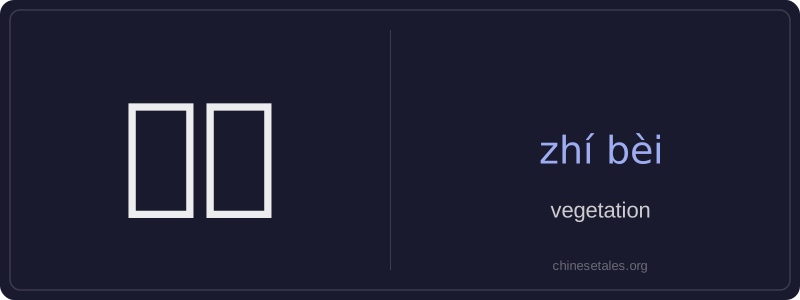
植被 (zhí bèi) means 'vegetation' — the collective plant life found in a particular region or habitat, such as forests, grasslands, or wetlands. It is a formal, scientific term commonly used in ecology, geography, and environmental studies. The first character 植 (zhí) means 'to plant' or 'plant-related', while 被 (bèi) here does not mean 'to be covered' but functions as a noun-forming suffix (similar to '-cover' or '-layer'), yielding the compound meaning 'plant cover' or 'plant layer'.
This word emphasizes the natural, ground-level plant community as a whole — not individual species, but the structure and composition of flora across an area. It appears frequently in reports on land use, climate change impacts, conservation efforts, and ecosystem health. Unlike more casual terms like 植物 (zhíwù, 'plants') or 绿色植物 (lǜsè zhíwù, 'green plants'), 植被 carries a technical, ecological connotation and is rarely used in everyday conversation.
Example Sentences
Related Words
国语
‘Guó yǔ’ literally means 'national language'—
面条
‘面条’ (miàn tiáo) literally means ‘flour str
背后
背后 literally means 'back + behind' and functions
认同
‘认同’ (tóng rèn) is a verb meaning ‘to ident
无论谁
‘无论谁’ (wú lùn shéi) is a pronoun meaning
中学
'Zhōngxué' literally combines 'zhōng' (middle)
见面
见面 literally means 'see face' — combining 见 (t
外语
‘外语’ literally means ‘outside language’ —