Word Explanation
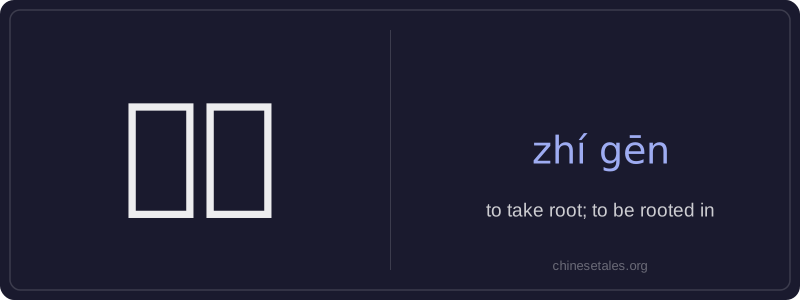
植根 literally means 'to plant roots' — combining 植 (to plant, to establish) and 根 (root). Figuratively, it describes how ideas, traditions, cultures, or institutions become deeply embedded and stable over time, much like a plant sending down strong roots into soil. It emphasizes organic growth, long-term presence, and foundational influence.
This verb is commonly used in formal or literary contexts — especially when discussing cultural identity, historical continuity, social values, or organizational development. It often appears in subject-verb-object constructions (e.g., 'this belief is rooted in...') and pairs with prepositions like 在 (in), 于 (in/formal), or with nouns indicating origin or location (e.g., 植根于传统, 植根于民间). Unlike the simple verb 生根 (to take root), 植根 carries a more intentional, active connotation — suggesting deliberate establishment rather than passive emergence.
Example Sentences
Related Words
国语
‘Guó yǔ’ literally means 'national language'—
面条
‘面条’ (miàn tiáo) literally means ‘flour str
背后
背后 literally means 'back + behind' and functions
认同
‘认同’ (tóng rèn) is a verb meaning ‘to ident
无论谁
‘无论谁’ (wú lùn shéi) is a pronoun meaning
中学
'Zhōngxué' literally combines 'zhōng' (middle)
见面
见面 literally means 'see face' — combining 见 (t
外语
‘外语’ literally means ‘outside language’ —