Word Explanation
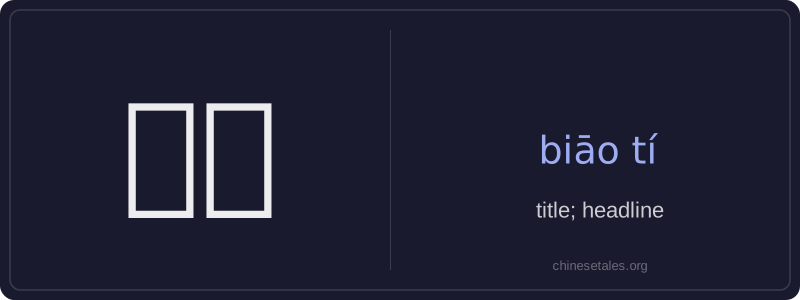
‘标题’ (biāo tí) is a compound noun meaning ‘title’ or ‘headline’. It combines two characters: ‘标’ (biāo), which means ‘mark’, ‘sign’, or ‘indicate’, and ‘题’ (tí), which means ‘topic’, ‘subject’, or ‘question’. Together, they literally suggest ‘a marked subject’ — that is, the main identifying label for a piece of writing, article, video, or presentation. This word is widely used in both print and digital media, as well as in academic, professional, and everyday contexts.
You’ll encounter ‘标题’ on newspaper front pages, book covers, blog posts, PowerPoint slides, and even app notifications. Unlike the more literary or formal ‘题目’ (tímù), which often refers to an exam question or assignment topic, ‘标题’ emphasizes public-facing, attention-grabbing labeling. It’s neutral in register and appropriate in both spoken and written Chinese, though slightly more common in writing than casual speech.
Example Sentences
Related Words
国语
‘Guó yǔ’ literally means 'national language'—
面条
‘面条’ (miàn tiáo) literally means ‘flour str
背后
背后 literally means 'back + behind' and functions
认同
‘认同’ (tóng rèn) is a verb meaning ‘to ident
无论谁
‘无论谁’ (wú lùn shéi) is a pronoun meaning
中学
'Zhōngxué' literally combines 'zhōng' (middle)
见面
见面 literally means 'see face' — combining 见 (t
外语
‘外语’ literally means ‘outside language’ —