Word Explanation
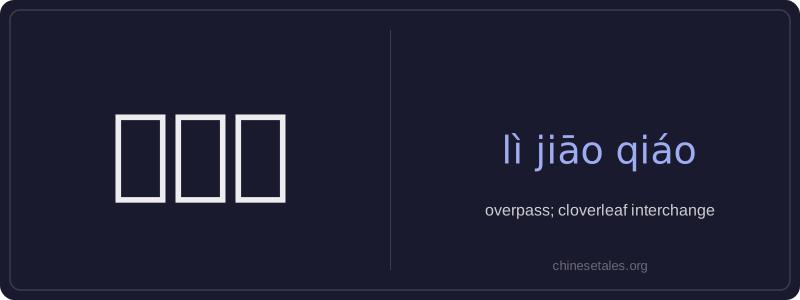
立交桥 (lì jiāo qiáo) literally means 'standing interchange bridge' — '立' suggests vertical separation or elevation, '交' means 'intersection' or 'crossing', and '桥' means 'bridge'. Together, it refers to an elevated road structure that allows two or more roads to cross at different levels without traffic signals, commonly found in urban and highway settings. Unlike simple overpasses (which may only carry one road over another), a 立交桥 often involves multiple ramps, loops, and layered roadways — especially cloverleaf or diamond configurations — enabling continuous, high-capacity traffic flow.
This term is used almost exclusively for engineered road interchanges in China, whether in cities like Beijing or on expressways. It’s neutral in register and appears frequently in transportation reports, navigation apps, and daily conversation when giving directions. While 'overpass' is a close English equivalent, 立交桥 implies greater complexity than a basic overpass — it’s not just a bridge but a full grade-separated intersection system.
Example Sentences
Related Words
国语
‘Guó yǔ’ literally means 'national language'—
面条
‘面条’ (miàn tiáo) literally means ‘flour str
背后
背后 literally means 'back + behind' and functions
认同
‘认同’ (tóng rèn) is a verb meaning ‘to ident
无论谁
‘无论谁’ (wú lùn shéi) is a pronoun meaning
中学
'Zhōngxué' literally combines 'zhōng' (middle)
见面
见面 literally means 'see face' — combining 见 (t
外语
‘外语’ literally means ‘outside language’ —