Word Explanation
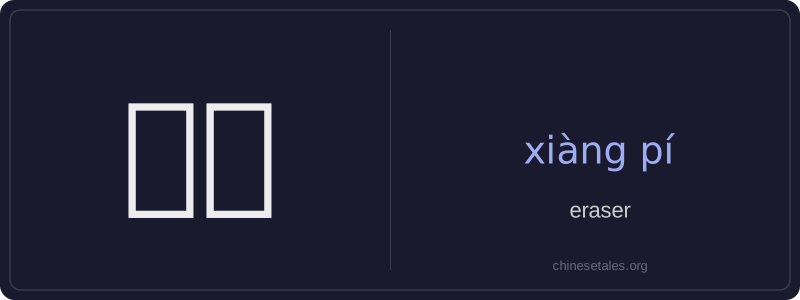
‘橡皮’ (xiàng pí) literally means ‘rubber skin’ — 橡 (xiàng) refers to rubber (originally from the rubber tree), and 皮 (pí) means ‘skin’ or ‘hide’. Historically, early erasers were made from natural rubber, hence the name. Today, most erasers are synthetic, but the term remains unchanged. It is a common, everyday noun used primarily in school, office, and artistic contexts for correcting pencil marks.
The word is neutral in register and widely understood across all age groups and regions of Mandarin-speaking communities. Unlike some compound nouns that can be shortened, ‘橡皮’ is rarely abbreviated — you wouldn’t say just ‘橡’ or ‘皮’ alone to mean eraser. It functions as a standalone countable noun: you can say 一块橡皮 (a piece of eraser), 几块橡皮 (several erasers), or 我的橡皮 (my eraser).
Example Sentences
Related Words
国语
‘Guó yǔ’ literally means 'national language'—
面条
‘面条’ (miàn tiáo) literally means ‘flour str
背后
背后 literally means 'back + behind' and functions
认同
‘认同’ (tóng rèn) is a verb meaning ‘to ident
无论谁
‘无论谁’ (wú lùn shéi) is a pronoun meaning
中学
'Zhōngxué' literally combines 'zhōng' (middle)
见面
见面 literally means 'see face' — combining 见 (t
外语
‘外语’ literally means ‘outside language’ —